
If you want better drainage, proper gutter installation should come first. It protects your roofline, siding, and foundation from runoff. A strong gutter installation plan also improves long-term water control. It can reduce repair stress and support safer drainage in every season. This guide explains how proper gutter installation helps your home, what affects the process, and why good planning matters.
Why Does Proper Gutter Installation Matter for Your Home?
Your gutters do more than catch rain. They guide water away before it damages your home. Without proper gutter installation, runoff can spill near siding, pool near the base, and create expensive moisture issues over time. That is why homeowners should take this system seriously from the start.
A well-planned proper gutter installation improves drainage, protects exterior surfaces, and supports stronger water control in every season. It also helps when you later need gutter downspout installation or want to install gutter guards for easier upkeep. In my view, many homeowners wait until they see overflow stains or soil washout. That delay often leads to bigger repairs. A strong system works quietly, but it protects a lot. It helps with drainage, supports the roof edge, and makes gutter replacement less urgent when the original setup was done right.
What Are the Main Parts of Proper Gutter Installation?
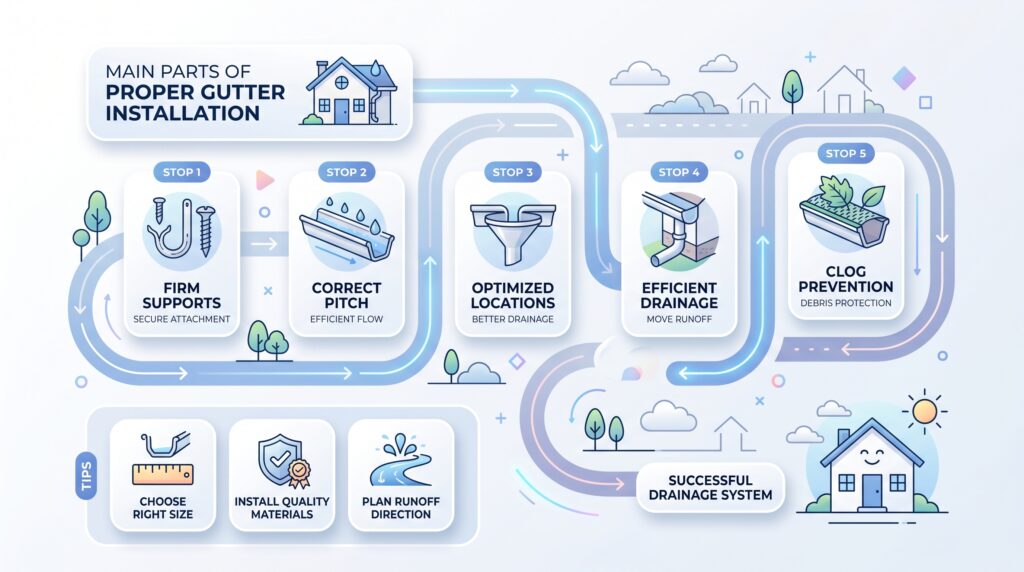
A good system depends on more than the gutter itself. Every part works together to control runoff safely. When you plan proper gutter installation, you should think about gutter size, outlet placement, downspouts, slope, support, and debris control. If one part is off, the full drainage path can struggle.
- Gutter Slope: A slight pitch helps water move toward outlets without pooling.
- Secure Hangers: Strong supports keep the system stable during storms and seasonal stress.
- Outlet Placement: Good outlet locations improve flow and support better drainage balance.
- Gutter Downspout Installation: Downspouts move runoff away from the roof edge and foundation.
- Debris Protection: Many homeowners install gutter guards to reduce clog risks over time.
- Material Fit: The right material choice supports long-term gutter installation performance.
When these parts work together, your home gets stronger and more reliable drainage. I have seen homes with good-looking gutters still struggle because the pitch was wrong or the outlets were poorly placed. That is why proper gutter installation should never focus on appearance alone. The best results come from smart design, careful setup, and attention to every working part.
How Does Proper Gutter Installation Compare to Poor or Basic Installation?
Many gutter problems start on day one. The system may look fine from the ground, but poor setup often causes slow water flow, overflow, and long-term strain. Proper gutter installation creates a more dependable system because it plans for slope, outlet size, support spacing, and safe runoff direction. A rushed job often ignores those details.
The real difference shows up after heavy rain. A weak setup may leak at joints, sag under stress, or send water too close to the foundation. A stronger gutter installation controls runoff better and supports easier upkeep later. It can also make future upgrades like gutter downspout installation or gutter replacement much simpler. In my opinion, this is why professional planning matters so much. The system does not need to look flashy. It needs to work well every time it rains.
| Feature | Proper Installation | Poor or Basic Installation |
| Water flow | Smooth and directed | Uneven or weak |
| Gutter slope | Correctly planned | Often inconsistent |
| Downspout support | Well-positioned | Sometimes limited |
| Long-term value | Stronger | Lower |
| Upgrade readiness | Easier | More difficult |
| Risk of overflow | Lower | Higher |
How Can Proper Gutter Installation Protect Your Home Long Term?
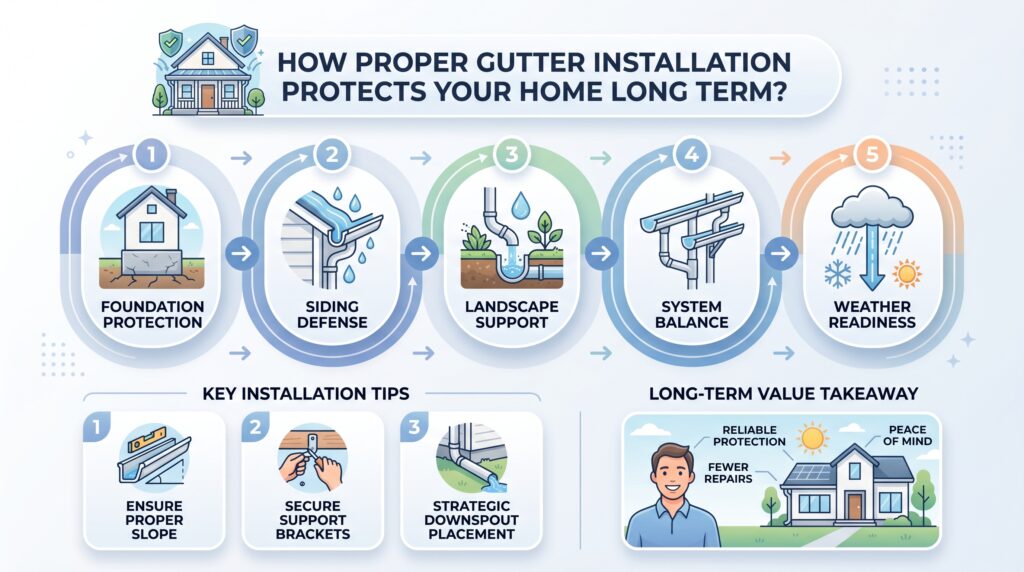
Water damage often starts small. You may first notice splash marks, soft soil, or moisture near the lower wall. Those signs usually point to weak drainage. That is why proper gutter installation matters so much for long-term home protection. It gives rainwater a clear path away from the places where trouble begins.
A well-built system helps control runoff before it damages siding, trim, landscaping, or the home’s base. It also improves the performance of related parts like gutter downspout installation and support brackets. In many homes, stronger drainage means fewer long-term repairs and fewer surprise maintenance problems. I often tell homeowners that the best gutter system is the one they stop worrying about. That happens when the flow works, the pitch is right, and the exits send water where it belongs.
- Foundation Protection: Good drainage keeps water away from the home’s base.
- Siding Defense: Better runoff control reduces splashback against trim and walls.
- Landscape Support: Strong flow helps protect soil, mulch, and plant beds.
- System Balance: Smart gutter downspout installation improves full drainage performance.
- Future Flexibility: Strong setup makes upgrades and gutter replacement easier later.
- Weather Readiness: A proper design handles seasonal rain more safely and evenly.
When you invest in strong planning, you protect much more than the gutters themselves. You protect the parts of the home that cost far more to repair later. That is why proper gutter installation offers such solid long-term value. It helps your drainage system work as a quiet form of home protection every season.
What Steps for Rain Gutter Installation Should You Expect?
Most homeowners want to know what the process actually involves. That is a smart question because the best results come from careful planning, not guesswork. The main steps for rain gutter installation usually include measuring the roofline, planning the pitch, choosing outlet points, setting hanger spacing, and connecting downspouts for safe runoff control.
A good installer should also check roof shape, runoff volume, and drainage needs around the property. That matters because not every home drains the same way. Some homes need extra support, while others need smarter gutter downspout installation or better exit paths. In my experience, the process goes much better when the team treats the system as part of total drainage, not just a roof accessory. That mindset leads to stronger proper gutter installation and better long-term results.
What Affects the Estimated Time to Install Gutters?
Homeowners often ask how long the work will take. The answer depends on the home, the roof, and the drainage design. The estimated time to install gutters changes based on house size, gutter length, corner count, downspout needs, and whether the job includes extras like install gutter guards during the same visit.
Roof layout also matters more than many people expect. A simple one-story home may move quickly, while steep rooflines or complex drainage needs slow the process. Roof access and complexity for gutters can change labor time in a big way. Weather and site safety also affect the schedule. In my view, speed matters less than accuracy. A rushed job may save a little time, but a careful proper gutter installation protects your home much longer.
Why Do Safety and Skill Matter in Proper Gutter Installation?
Gutter work may look simple from the ground, but it often involves ladders, roof edges, heavy sections, and detailed measurements. That is why gutter installation safety tips matter so much. Safe setup protects both the workers and your home during the installation process.
Skill matters just as much as safety. The installer must understand pitch, outlet flow, hanger spacing, and how to manage roof access and complexity for gutters on different home styles. That is where gutter installation expertise level becomes important. A more experienced team can spot drainage issues early and adjust the plan before problems appear. I have seen simple homes get poor results because the installer treated the job like basic labor instead of a drainage system. Strong proper gutter installation needs both care and real knowledge.
What Factors Should You Review Before Proper Gutter Installation Starts?
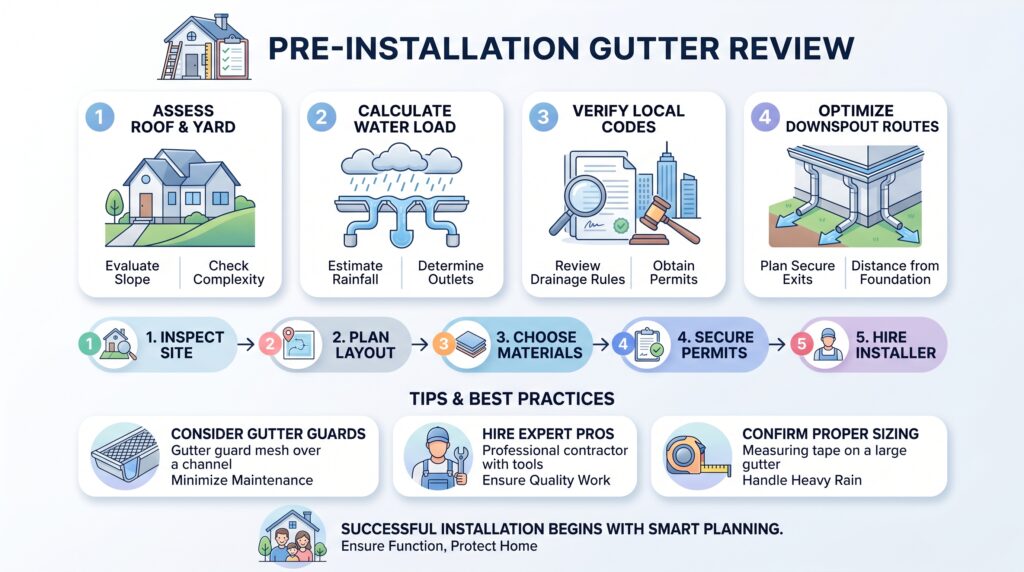
Before the first section goes up, several details need attention. Your roof shape, water load, exit points, and yard slope all affect the final result. Proper gutter installation works best when the plan fits the home instead of using a one-size setup. That is why a thoughtful review should happen before materials are even cut.
- Roof Access and Complexity for Gutters: Steep roofs and tight spaces can change the installation plan.
- Local Regulations for Gutters: Some areas have rules about drainage paths and runoff control.
- Outlet Planning: Good outlet placement improves flow and reduces overflow risks.
- Downspout Routing: Strong gutter downspout installation helps water leave the home safely.
- Guard Options: Many owners choose to install gutter guards during the main project.
- Installer Skill: The right gutter installation expertise level improves results from the start.
These checks matter because small planning mistakes create long-term drainage problems. A short review at the start can prevent years of overflow, poor slope, or weak runoff direction. In my opinion, the best projects begin with careful observation, not rushed measuring. That is what gives homeowners better function, stronger value, and more confidence in the final gutter installation result.
Is Proper Gutter Installation Worth the Investment?
If you want long-term protection, the answer is yes. Proper gutter installation helps control water before it damages the expensive parts of your home. It supports stronger drainage, cleaner roof runoff, and fewer surprises after storms.
The value grows over time because a well-built system reduces stress on siding, landscaping, and lower walls. It also makes future improvements like gutter replacement, gutter downspout installation, or added guards easier to manage. In my experience, homeowners notice the value after the first few hard rains. Water moves where it should, and the home stays drier where it matters most. That is why this upgrade remains such a smart investment.
What Questions Do Homeowners Ask About Proper Gutter Installation?
How do you know if a home needs new gutters?
You may notice sagging, overflow, rust, or repeated leaks. In many cases, those signs point to poor drainage or the need for gutter replacement.
Should you install gutter guards during the same project?
Yes, many homeowners do that. When you install gutter guards during the main job, you save time and help reduce future debris problems.
What affects the estimated time to install gutters?
The estimated time to install gutters depends on house size, roof shape, downspout needs, and job complexity. Simple homes move faster than homes with steep rooflines or harder access.
Do local regulations matter for gutter projects?
Yes, they can. Local regulations for gutters may affect how runoff gets directed or how drainage connects to the property.
Why does installer skill matter so much?
The right gutter installation expertise level helps ensure correct slope, safe support, and better drainage. A more skilled team usually spots problems before they become expensive mistakes.
Are You Ready to Choose Proper Gutter Installation for Your Home?
If you want stronger drainage and fewer water problems, now is a smart time to act. A well-planned system protects your home in quiet but important ways. It helps rain move away before damage starts.
Cranmer’s Seamless Siding & Gutters helps homeowners build drainage systems that fit real home needs. If you need proper gutter installation, help with gutter replacement, or support for gutter downspout installation, this is the kind of service that adds real value. Reach out today to improve runoff control, protect your exterior, and get a smarter gutter installation plan for your home.
- Company Name: Cranmer’s Seamless Siding & Gutters
- Phone Number: 816-262-4383
- Website Link: https://chillicothegutters.com