
Professional Gutter Installation In Hamilton, Missouri
Gutter Installation In Hamilton, MO
A gutter system should do more than sit along the edge of your roof. It should collect roof runoff, direct that water toward properly planned outlets and downspouts, and move the water toward a suitable discharge area.
For Hamilton homeowners, that means gutter installation should be planned around the actual roofline, drainage pattern, fascia condition, gutter pitch, downspout layout, and property conditions.
Cranmer Seamless Siding & Gutters provides Gutter Installation In Hamilton for homeowners who need new gutters, replacement of an aging system, or a better roof-to-ground drainage configuration.
With 22+ years of hands-on experience, Cranmer is a family-owned company offering custom-fit seamless gutter systems and free project estimates.
Whether your Hamilton home has an older gutter system that repeatedly leaks, gutters that overflow during heavy rain, or no effective gutter system at all, the installation should begin with the property—not a one-size-fits-all gutter package.
The complete drainage path should be considered:
Roof runoff → Gutter → Outlet → Downspout → Extension or discharge route
That is how a gutter installation becomes part of a complete exterior drainage system rather than simply a new piece of hardware attached to the roof edge.

Get Your Free Quote
Tell us what needs to go — we’ll get back to you fast.
- 22+ Years of Hands-On Experience
- Family-Owned & Operated
- Custom-Fit Seamless Gutters
- Free Project Estimates
Why Does Gutter Installation In Hamilton Require Proper Drainage Planning?
Hamilton properties can have different roof shapes, roof areas, gutter lengths, downspout layouts, and exterior conditions.
The current Hamilton service area also includes homes with older exterior materials, properties where runoff needs to be moved farther away from the foundation, and open properties where wind and rain can put additional demands on exterior components.
Those conditions make property-specific gutter planning more useful than simply installing the same configuration on every home.
Before a new gutter system is installed, the project should consider:
- Roof area contributing runoff
- Roof pitch and roof geometry
- Length of each gutter run
- Gutter size
- Gutter pitch
- Corners and end points
- Outlet locations
- Downspout quantity and routing
- Fascia condition
- Attachment points
- Final discharge locations
- Existing drainage problems
- Property access
A Hamilton home with a long roofline may require a different drainage layout from a smaller home with several independent roof sections.
Likewise, a gutter can be correctly installed at the roof edge but still contribute to a drainage problem if the downspout releases water too close to the building.
That is why professional gutter installation should evaluate the entire water path.
What Gutter Services Does Cranmer Provide?
Cranmer manages every stage of a residential gutter system’s lifecycle, handling proactive inspections, routine upkeep, targeted repairs, full replacements, drainage optimizations, and brand-new installations.


Thorough professional evaluations pinpoint early signs of leaks, damaged materials, improper pitch, unsecured hardware, fascia deterioration, and drainage failures before they escalate into major, costly repairs.
Custom-built seamless gutters are precisely measured to match your exact roofline dimensions, forming an uninterrupted water management network that drastically minimizes vulnerable joints along primary runs.


Accumulated leaves, twigs, dirt, and organic buildup can obstruct proper water drainage through your gutters and downspouts, while routine clearing restores unobstructed flow throughout the entire system.


Targeted leaks can often be resolved by properly prepping and sealing the damaged zone, provided the adjacent gutter material is still structurally sound enough to support a reliable fix.


Gutters that begin to sag or drift off their proper pitch often trap standing water or misdirect runoff away from its intended path, while professional realignment reestablishes the correct slope for efficient water flow.


Water leakage frequently occurs near miters, seams, end caps, brackets, anchor points, or compromised sections, making the initial priority locating the exact point of failure and determining its underlying cause.


Advanced age, severe sagging, extensive structural deterioration, or persistent water management failures often signal that replacing aging gutters is a more practical and cost-effective choice than continuous repairs.


Sectional gutter networks utilize distinct interlocking segments joined together, offering a practical water management alternative suited for specific property layouts, targeted repairs, or unique project criteria.

Advanced debris guards create a durable protective shield against falling leaves, twigs, and dense organic matter, significantly reducing the buildup of blockages and cutting down the frequency of manual cleanings.
Protect your Hamilton home with specialized hail damage restoration, featuring expert inspections and precise repairs or replacements for dented, cracked gutters to prevent future leaks and streamline the insurance claims process.

Combat moisture-induced rot in Chillicothe with professional fascia board replacements utilizing durable, weather-resistant materials designed to secure your gutter systems, safeguard roof edges, and deliver long-lasting exterior protection.
Extended downspouts safely channel collected roof runoff well beyond your home's immediate foundation walls, directing water toward safer, more effective drainage areas.
What Does Professional Gutter Installation In Hamilton Include?
A professional gutter installation involves more than measuring the visible roof edge.
The system needs to be planned, measured, fabricated or prepared, positioned, attached, connected, and reviewed so roof runoff has a controlled route away from the structure.
For a Hamilton property, installation planning can include:
Roofline Evaluation
The roofline determines where rainwater enters the gutter system and how individual gutter runs should be arranged.
Multiple roof sections, corners, changes in roof elevation, and longer runs can all affect the final configuration.
Gutter Run Measurement
Gutter runs are measured so the required lengths, corners, outlets, and downspout locations can be planned around the actual home.
Fascia Evaluation
The gutter attachment area should be checked for visible deterioration or conditions that could affect secure mounting.
If the fascia is damaged, that condition should be addressed rather than simply installing a new gutter over an unsuitable support area.
Cranmer also provides fascia board replacement for properties where damaged fascia needs attention.
Outlet and Downspout Planning
The outlet location determines where collected water leaves the horizontal gutter run.
Downspout placement should then be considered in relation to the roof drainage pattern and final ground-level discharge.
Custom Fabrication
For seamless gutter systems, longer runs can be fabricated to the property’s measurements, reducing unnecessary joints along the primary gutter channels.
How Are Gutter Size, Roof Area and Roof Pitch Determined?
Gutter sizing is one of the most important technical parts of a new installation.
The correct gutter size should be considered in relation to the amount of roof area draining toward the gutter, the roof pitch, the shape of the roof, the length of the gutter run, and the downspout configuration.
A gutter system should not be selected simply because a particular size is commonly installed on residential homes.
Roof Area
A larger roof drainage area can send more water toward a particular gutter section. If several roof sections drain toward one run, that concentration should be considered during installation planning.
Roof Pitch
Roof pitch influences how water travels from the roof surface toward the gutter. A steeper roof can direct runoff differently from a lower-slope roof, which means roof geometry should be considered when evaluating the drainage system.
Gutter Run Length
Long gutter runs can collect runoff across a larger section of the roof edge. The outlet and downspout layout therefore becomes important because water needs a practical route out of the gutter.
Gutter Capacity
The gutter needs enough capacity for the runoff being directed toward it. However, increasing gutter size does not automatically solve every overflow problem. If the outlet configuration, downspouts, gutter pitch, or final discharge are inadequate, a larger gutter may not correct the entire drainage issue.
What Gutter Materials and Profiles Are Available?
Material and profile selection affects both appearance and system configuration.
Aluminum Gutters
Cranmer installs custom seamless aluminum gutters for residential projects.
Aluminum is lightweight, available in multiple colors, and suitable for custom fabrication.
Copper Gutters
Copper provides a distinctive exterior appearance and is often selected when the homeowner wants a specialty gutter material.
Cranmer also offers copper gutter systems for qualifying projects.
K-Style Gutters
K-style gutters have a decorative front profile and are commonly used with residential rooflines.
Their appearance can coordinate with siding, trim, fascia, and roofing.
Half-Round Gutters
Half-round gutters use a rounded profile and provide a different appearance from K-style systems.
The best profile depends on the home’s exterior design, roofline, drainage requirements, and selected material.
Color Selection
Gutter color can also be considered as part of the exterior design.
Hamilton homeowners can evaluate available colors in relation to siding, roofing, fascia, trim, and other visible exterior elements.
How Should Downspouts Be Positioned on a Hamilton Home?
Downspouts are a critical part of the gutter system because they move collected water from the horizontal gutter channel toward the ground-level discharge area.
Poor downspout planning can cause problems even when the gutter itself looks correctly installed.
Downspout planning should consider:
- Roof drainage areas
- Gutter run length
- Outlet locations
- Water concentration
- Number of roof sections
- Building height
- Existing drainage
- Ground-level discharge
- Distance from the foundation
Why Downspout Capacity Matters
A gutter system collects water, but the downspout must provide the route for that water to leave the gutter.
If too much runoff is directed toward an inadequate or poorly positioned downspout configuration, water may back up or overflow during heavy rain.
Why Downspout Placement Matters
Where the downspout is installed affects where water reaches the ground.
A downspout that releases water immediately beside the building can leave the property with a ground-level drainage problem even when the roof-level gutter is functioning properly.
For homes that need additional drainage distance, Cranmer provides downspout extension installation and downspout drainage solutions.

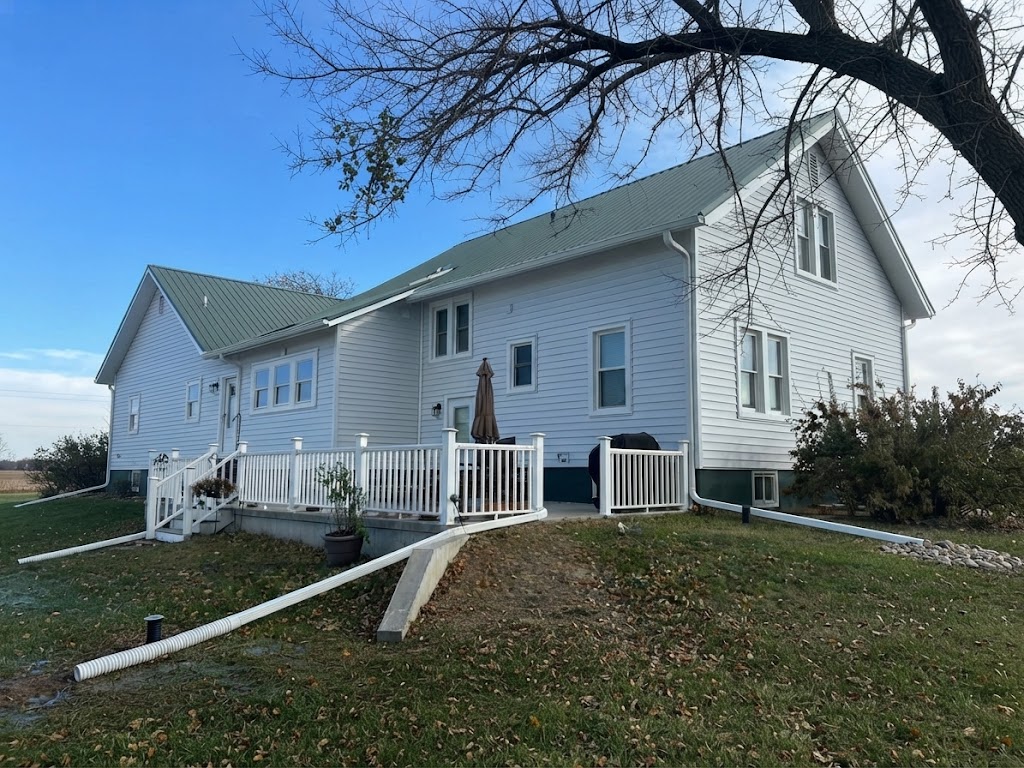
Are Seamless Gutters Better Than Sectional Gutters?
Seamless and sectional gutters use different construction methods.
Seamless Gutters
A seamless gutter system uses longer custom-fabricated runs measured around the property’s roofline.
The primary advantage is fewer joints along those continuous horizontal runs.
Fewer main-run joints can reduce the number of potential leak locations.
However, seamless does not mean completely joint-free.
Connections are still required around:
- Corners
- Outlets
- End caps
- Downspout connections
- Transitions
Sectional Gutters
Sectional gutters are assembled from multiple individual pieces.
They can be useful for certain layouts and applications and can make individual sections easier to replace or modify.
Cranmer also offers sectional gutter installation for homeowners who prefer or require that type of system.
The correct choice should be based on the roofline, drainage requirements, project scope, appearance, and installation conditions.
Should Hamilton Homes Use 5-Inch or 6-Inch Gutters?
There is no universal gutter size that is right for every Hamilton home.
The choice between 5-inch and 6-inch gutters should be based on the property’s roof drainage requirements and overall system design.
5-Inch Gutters
A 5-inch gutter can be appropriate for residential roof configurations where the roof area, pitch, gutter layout, outlets, and downspout configuration are compatible with that system.
6-Inch Gutters
A 6-inch gutter provides a larger channel and may be considered when the property’s roof drainage requirements or runoff concentration justify additional capacity.
But a larger gutter is not automatically a better gutter.
A properly designed 5-inch system can outperform a poorly configured larger system if the drainage layout, pitch, outlets, and downspouts are planned correctly.
The important question is not simply:
“What size gutter should I buy?”
It is:
“What gutter and downspout configuration makes sense for this roof?”
Why Do Gutter Pitch, Hangers and Fascia Matter?
A gutter system needs correct positioning and secure support to function as intended.
Gutter Pitch
Gutters need an intentional slope toward their outlets.
If a section loses its pitch or develops a low spot, water can remain in the gutter instead of moving toward the downspout.
Standing water also adds unnecessary weight to the system.
For existing gutters that have lost alignment but remain serviceable, Cranmer offers gutter realignment.
Hangers and Fasteners
The gutter needs secure support along the roof edge.
If supports loosen or the gutter pulls away from the fascia, the gutter may sag and lose the pitch needed for proper drainage.
Fascia
Fascia is an important attachment area for many residential gutter systems.
If the fascia is soft, damaged, or deteriorated, the mounting condition should be considered before installing a new gutter.
Installing a new gutter without addressing a compromised support area can leave the new system vulnerable to movement.
Drip Edge and Roof-Edge Conditions
The roof edge, drip edge, fascia, and gutter occupy the same working area.
During installation, visible roof-edge conditions should therefore be evaluated so the gutter system fits appropriately with the existing exterior components.
What Are the Signs You Need New Gutters?
Not every gutter problem means the entire system needs replacement.
However, certain conditions indicate that the existing system should be evaluated.
Common warning signs include:
- Water overflowing during rain
- Gutters leaking repeatedly
- Severe sagging
- Gutters pulling away from the roof edge
- Standing water
- Multiple damaged sections
- Repeated temporary repairs
- Poor downspout configuration
- Water collecting close to the foundation
- Significant deterioration
- Gutter sections that no longer maintain proper pitch
A gutter inspection can help determine whether the underlying issue is debris, leakage, alignment, attachment, drainage configuration, fascia, or widespread deterioration.
Should You Repair or Replace Your Hamilton Gutters?
Replacement is not automatically the correct solution.
If the existing system remains structurally serviceable and the problem is localized, repair or realignment may make more sense.
Repair May Be Appropriate When:
- One section is leaking
- A joint or corner needs attention
- A suitable end cap needs sealing
- A gutter has lost alignment
- A small section has physical damage
- Debris is causing overflow
- The existing system remains generally serviceable
Cranmer provides gutter leak repair for suitable localized conditions.
For appropriate connections and seams, gutter leak sealing may also be considered.
Replacement May Be More Practical When:
- Deterioration is widespread
- Multiple sections repeatedly leak
- Severe sagging affects the system
- Large areas are physically damaged
- Repairs keep failing
- The existing layout no longer provides suitable drainage
- The gutter system has reached a condition where continued repairs are no longer practical
For larger replacement projects, Cranmer provides residential gutter replacement.
What Is the Gutter Installation Process in Hamilton?
Professional installation should begin with understanding the property before fabrication or installation starts.
Step 1 — Discuss the Property
The first step is to understand what is happening with the existing system or why a new gutter system is needed.
Useful information can include:
- Property location
- Existing gutter condition
- Number of stories
- Overflow locations
- Leaking areas
- Downspout concerns
- Drainage problems
- Visible fascia damage
- Desired gutter material
- Access conditions
Step 2 — Evaluate the Roofline
The roofline is reviewed for:
- Gutter runs
- Corners
- Roof sections
- Fascia
- Roof-edge conditions
- Existing gutters
- Outlet locations
- Downspout routes
Step 3 — Plan the Drainage Path
The gutter is considered together with the outlets, downspouts, and final discharge locations.
This is important because the drainage system does not end at the edge of the roof.
Step 4 — Measure the Home
Gutter lengths, corners, outlets, and downspout positions are measured around the actual property.
Step 5 — Select Materials and Configuration
The gutter material, profile, size, color, downspout arrangement, and related components are selected around the project requirements.
Step 6 — Fabricate Seamless Runs
For a seamless system, longer gutter sections are fabricated according to the measured roofline.
This reduces the number of joints along the primary horizontal runs.
Step 7 — Install the Gutter System
The gutter runs are positioned with the intended pitch and secured along the roof edge.
Corners, outlets, end caps, and downspouts are connected as part of the completed system.
Step 8 — Review Drainage
The completed system is reviewed for alignment, attachment, outlet configuration, downspout routing, and overall drainage setup.
Step 9 — Final Walkthrough
The completed work is reviewed with the homeowner and the project area is left clean.
Service Areas
Where We Provide Gutter Installation in Hamilton, MO
Cranmer Seamless Siding & Gutters proudly brings comprehensive exterior solutions to Chillicothe and various neighboring Missouri communities, with dedicated regional pages outlining specific service availability for each area.
Chillicothe, MO
Chillicothe serves as Cranmer's core operational hub for all seamless gutter installations, targeted repairs, drainage upgrades, siding enhancements, and comprehensive exterior solutions.
Cameron, MO
Tailored exterior solutions for Cameron residents addressing worn-out siding, troublesome drainage issues, or upcoming home renovation goals.
Princeton, MO
Comprehensive exterior and water management services for Princeton properties, designed to update and optimize drainage infrastructure for both established neighborhood houses and rural homesteads.
Marceline, MO
Dependable exterior and drainage solutions for Marceline residents designed to protect structural integrity while seamlessly preserving the architectural charm of your home.
Macon, MO
Professional exterior upgrades for Macon homeowners, providing expert installation, complete replacements, targeted repairs, and comprehensive siding enhancements to optimize drainage and property protection.
Hamilton, MO
Targeted exterior care for Hamilton properties, specializing in comprehensive gutter upkeep, drainage optimization, fascia restoration, and professional siding solutions.
Trenton, MO
Customized exterior improvements for Trenton residents focused on optimizing roof runoff control and enhancing overall structural curb appeal.
Milan, MO
Comprehensive exterior installation, maintenance, and repair services for qualifying gutter, drainage, and siding projects throughout Milan.
Bethany, MO
Reliable exterior solutions for Bethany residents seeking professional installation, expert repairs, full replacements, and comprehensive home upgrades.
Gallatin, MO
Comprehensive exterior services and tailored gutter solutions for eligible properties throughout the Gallatin community.
Carrollton, MO
Specialized exterior maintenance, drainage optimization, and seamless gutter or siding services tailored for homeowners throughout the Carrollton community.
Brookfield, MO
Expert exterior renovations for Brookfield homes, providing professional installation, advanced drainage solutions, structural repairs, and comprehensive siding enhancements.
Kansas City, MO
Cranmer extends its expert gutter and exterior services to select Kansas City-area properties, so feel free to reach out to the team to verify project eligibility and service availability for your specific location.
What Affects Gutter Installation Cost in Hamilton?
There is no single gutter installation price that accurately applies to every Hamilton property.
Project cost depends on the actual scope of work and property conditions.
Factors that can influence the total include:
- Total gutter linear footage
- Number of stories
- Roofline complexity
- Roof drainage area
- Gutter size
- Seamless or sectional construction
- Material
- Number of downspouts
- Downspout extensions
- Existing gutter removal
- Gutter guards
- Fascia condition
- Property access
- Installation complexity
- Repair requirements
Why a Property-Specific Estimate Is Better
Two Hamilton homes can have similar roof-edge lengths but very different installation costs.
One may have a simple single-level roofline and straightforward downspout routing.
Another may have multiple roof sections, additional corners, difficult access, damaged fascia, several downspouts, or existing gutters that need removal.
A property-specific estimate accounts for those differences.
Cranmer provides free project estimates so homeowners can understand the proposed scope before deciding how to proceed.
Can Gutter Guards Be Installed With New Gutters?
Yes.
Gutter protection can be considered during a new gutter installation when it is appropriate for the roofline, gutter profile, debris conditions, and drainage configuration.
Planning the gutter and guard together can be useful because the protection system should work with the actual gutter rather than being treated as a separate afterthought.
However, gutter guards should not be used to hide a failing gutter.
If the existing system has severe sagging, widespread leaks, physical deterioration, or damaged fascia, those conditions should be addressed first.
Cranmer provides gutter guard installation for suitable systems.
Why Does the Final Downspout Discharge Location Matter?
The gutter system continues beyond the roof edge.
After water enters the gutter, it travels through the outlet and downspout toward a ground-level discharge point.
If that discharge point is too close to the building, the property can still experience unwanted water concentration near the foundation.
A downspout extension may help when additional discharge distance is appropriate.
Cranmer’s downspout extension service can help move water farther from the immediate building perimeter.
For broader drainage concerns, downspout drainage solutions can address the relationship between the downspout and its final discharge path.
The objective is to manage the complete route:
Roof → Gutter → Outlet → Downspout → Extension/Drainage Route → Final Discharge
Gutter Installation Service Area in Hamilton, Missouri
Cranmer provides gutter and exterior services for homeowners in Hamilton, Missouri and qualifying nearby Missouri communities.
Hamilton is identified by Cranmer as a residential service area, with local needs including gutter, drainage, fascia, and siding work. The company’s current Hamilton page specifically positions its service around older homes, runoff management, and open properties exposed to wind and rain.
For Hamilton homeowners, that means gutter planning can focus on actual property conditions such as:
- Older gutter systems
- Long or complicated rooflines
- Overflow during heavy rain
- Water collecting near foundations
- Gutters that have lost pitch
- Damaged or deteriorated fascia
- Downspouts that discharge too close to the home
- Open properties exposed to wind and rain
- Repeated gutter repairs
Homeowners in nearby Caldwell County communities can contact Cranmer to confirm service availability for their specific property and project scope.
Why Choose Cranmer for Gutter Installation In Hamilton?
A gutter installer should be able to evaluate more than the visible gutter channel.
Cranmer brings:
22+ Years of Hands-On Experience
Cranmer has more than two decades of exterior installation and service experience.
Family-Owned Service
Cranmer is a family-owned company serving Missouri homeowners.
Custom-Fit Seamless Gutters
Longer gutter runs can be measured and custom-fabricated around the property's roofline.
Drainage-Focused Planning
The installation considers roof runoff, gutter runs, outlets, downspouts, fascia, pitch, and final discharge.
Free Project Estimates
Homeowners can begin with a property-specific project estimate before deciding what work is appropriate. The goal is to match the solution to the condition of the Hamilton property rather than automatically recommending a complete replacement.
Related Gutter Services for Hamilton Homeowners
A new gutter system is not always the only solution.
Depending on the condition of your existing drainage system, Cranmer’s related services include:
- Gutter inspection — evaluate visible leaks, alignment, attachment, fascia, and drainage concerns.
- Gutter cleaning — remove debris when buildup is restricting normal water movement.
- Gutter leak repair — address suitable localized gutter leaks.
- Gutter leak sealing — seal suitable leaking seams, joints, corners, or end areas.
- Gutter realignment — correct suitable sections that have lost their intended pitch.
- Gutter guard installation — reduce larger debris entering suitable gutter systems.
- Residential gutter replacement — replace systems when deterioration or configuration makes continued repair impractical.
- Fascia board replacement — address damaged gutter-support areas.
- Downspout extension installation — move water farther from the immediate building perimeter.
- Downspout drainage solutions — improve the broader roof-to-ground drainage route.
- Sectional gutter installation — provide a modular alternative where appropriate.
- Copper gutter systems — specialty gutter option for qualifying projects.
This service ecosystem is important because gutter problems can originate at different points in the drainage system.
A leak may require repair.
A sagging gutter may require realignment.
A damaged attachment area may require fascia work.
Our Happy Customers
What Do Homeowners Say About Cranmer?
 Posted on Google

 Seth BeVelle
Trustindex verifies that the original source of the review is Google.
Excellent work. Dedicated Crew! Couldn’t be happier with the whole process! HIGHLY RECOMMEND!!Posted on Google Beverly CaselmanGreat job. Timely and honest.Posted on Google
 Ross WoodWorked with them a couple years ago on my dad's house. They were very professional and maintained communication the entire time and were able to work with us on pricing and payments. They cleaned up after themselves and didn't leave a mess. I would definitely recommend them to anybody in the area that needs work done on their home.Posted on Google
 Dean McAdamsCrammer's did a great job installing our siding price was reasonable , and I have had so many people liking the look of my house followup service was excellentPosted on Google
 Jason CroweThey did a wonderful job for us. Our new guttering looks and works great!Posted on Google
 Carolyn GreenwoodGreat experience! Responded very quickly to my request and guttering was installed perfectly…and in a very timely manner! Couldn’t have asked for anyone better!Posted on Google
 Brice PotterVery easy to deal with. I have used them a couple times and would recommend them to anyone.Posted on Google
 Joe MarshallGreat, reliable and experienced. Did a great job for me.Posted on Google
 Carl McbeeWe used Cranmer's on a guttering job on our building and it was a super easy process. Price was very reasonable and the workers were quick to get the job done. Would definitely recommend.Posted on Google
 Don HeadWe had Cranmer's install siding and seamless gutters/leaf guard on our house and gutters/leaf guard on 2 outbuildings. Very happy. All were done in a timely and professional manner. They cleaned up the mess and hauled off all the old material when they were finished. We would recommend Cranmer's to anyone.Verified by TrustindexTrustindex verified badge is the Universal Symbol of Trust. Only the greatest companies can get the verified badge who has a review score above 4.5, based on customer reviews over the past 12 months. Read more

FAQ
Frequently Asked Questions About Gutter Installation In Hamilton
New gutter installation may be appropriate if your existing system is severely deteriorated, repeatedly leaks, sags, pulls away from the roofline, overflows despite reasonable maintenance, or no longer provides a practical drainage configuration.
If you are unsure whether you need complete replacement, an inspection can help identify the condition of the existing system.
Yes. Cranmer provides gutter and exterior services for Hamilton homeowners and qualifying nearby Missouri communities.
Project availability should be confirmed based on the property’s location and scope.
Seamless gutters can be a good option when a custom-fit system is appropriate for the property.
Their primary advantage is that longer runs have fewer joints along the main gutter channel.
That can reduce the number of potential leak points compared with a system assembled from many shorter sections.
No.
Seamless gutters reduce joints along the primary runs, but connections are still required around corners, outlets, end caps, downspouts, and other transitions.
Those areas still need proper installation and maintenance.
The correct size depends on roof area, roof pitch, gutter run length, roof geometry, runoff concentration, outlet configuration, and downspout layout.
A professional evaluation is more reliable than choosing a size solely based on the home’s square footage.
Not automatically.
A 6-inch gutter has a larger channel, but the correct size depends on the property’s drainage requirements.
A properly designed 5-inch system can be appropriate for some homes, while other properties may benefit from a larger configuration.
Yes, when the property is suitable for a new gutter system.
The installation should evaluate the roofline, fascia, roof runoff, gutter runs, outlets, downspouts, and final discharge locations.
Installation time depends on the property’s size and complexity.
Factors include gutter length, number of stories, roofline configuration, corners, outlets, downspouts, existing gutter removal, fascia work, access, and other project requirements.
A property-specific estimate provides a more useful expectation.
They can help when roof runoff is contributing to the problem.
However, the gutter is only one part of the drainage system.
The downspout and final discharge route also need to move water away from the immediate building perimeter appropriately.
Not every property needs one.
The need depends on where the downspout currently discharges water and whether that location is suitable for the property.
Where additional distance is useful, a downspout extension can move water farther from the building.
Overflow can have several causes.
Possible causes include:
- Incorrect gutter pitch
- Restricted outlets
- Inadequate downspout configuration
- Concentrated roof runoff
- Damaged gutter sections
- Poor roof drainage configuration
Cleaning only addresses debris-related problems.
If the gutters remain clean but continue to overflow, the drainage design should be evaluated.
Sometimes.
Leaves, sediment, dirt, and organic debris can restrict water movement through gutters and downspouts.
If debris is the main cause and the gutter remains serviceable, cleaning may restore normal flow.
If overflow continues after cleaning, another drainage problem may be involved.
It can when the gutter and supporting components remain suitable for continued use.
If the issue involves severe deterioration, damaged material, failed attachment, or damaged fascia, additional work may be required.
Repair may make sense when the issue is localized and the majority of the system remains serviceable.
Examples include a localized leak, damaged connection, isolated alignment problem, or suitable section requiring correction.
Replacement may become more practical when deterioration is widespread, multiple sections repeatedly fail, severe sagging is present, large portions are damaged, or the existing configuration no longer provides suitable drainage.
Yes.
Fascia can provide an important attachment area for residential gutters.
If the fascia is soft, damaged, or deteriorated, the gutter may not have a dependable mounting surface.
The fascia condition should therefore be evaluated before installing a new system.
Yes, when fascia replacement is appropriate for the project.
Addressing the underlying support condition can help provide a more suitable mounting area for the gutter system.
Yes.
Gutter guards can be considered during a new installation when they are compatible with the gutter profile and appropriate for the property’s debris conditions.
They can reduce larger debris entering the system but do not eliminate all future maintenance.
No.
Gutter guards can reduce the amount of larger debris entering a suitable system, but gutters and downspouts may still require inspection and maintenance.
Seamless gutters use longer custom-fabricated runs, while sectional gutters are assembled from multiple pieces.
Seamless systems generally have fewer joints along their primary runs.
Sectional systems can offer modular flexibility and may be appropriate for certain properties.
Cranmer’s residential gutter services include custom seamless aluminum gutters, with specialty copper gutter systems also available for qualifying projects.
Available material and configuration should be discussed based on the property and project requirements.
Gutter color can be selected to coordinate with visible exterior components such as siding, trim, fascia, and roofing.
Available color choices can be reviewed as part of the project estimate.
Yes. Cranmer offers free project estimates.
The estimate can be based on the actual property, its existing gutter condition, roofline, drainage concerns, and proposed project scope.
The property can be reviewed for roofline conditions, existing gutters, fascia, gutter runs, corners, outlets, downspout routes, drainage concerns, and access.
Those factors help determine what type of gutter system and installation scope are appropriate.
The project can be planned as a new drainage installation.
The roofline, runoff areas, gutter runs, outlets, downspouts, and final discharge locations should all be considered before the system is fabricated and installed.
A properly planned gutter system can help direct roof runoff away from exterior walls and reduce uncontrolled water flowing over siding.
However, overall water management depends on the complete roof-to-ground drainage system.
They can help by directing roof runoff toward controlled discharge locations rather than allowing concentrated water to fall directly beside the home.
The effectiveness depends on the entire drainage path and surrounding property conditions.
Corner leaks do not automatically mean the entire gutter system needs replacement.
The connection should be evaluated to determine whether cleaning, sealing, repair, realignment, or replacement is appropriate.
The downspout may be moving water correctly but releasing it in an unsuitable location.
A downspout extension or broader drainage solution may help move water farther away from the building.
Yes, qualifying Hamilton properties can be evaluated for gutter installation, replacement, repair, and related exterior services.
Older homes may require additional attention to existing fascia, roof-edge conditions, gutter attachment, and drainage configuration.
Cranmer serves Hamilton and qualifying nearby Missouri communities.
If your property is outside the immediate Hamilton service area, contact Cranmer to confirm availability before scheduling the project.
Ready for Gutter Installation In Hamilton?
If your Hamilton home’s gutters are leaking, overflowing, sagging, pulling away from the roof edge, or sending water toward the foundation, another temporary patch may not solve the underlying problem.
Cranmer Seamless Siding & Gutters can evaluate the roofline, plan the gutter and downspout configuration, fabricate custom-fit seamless gutters, and install the system around the actual drainage needs of your home.
Request a free project estimate and find out what gutter installation approach makes sense for your Hamilton property.
Cranmer Seamless Siding & Gutters
Serving Hamilton, Missouri & qualifying nearby communities
22+ years of hands-on experience
Custom-fit seamless gutters