
Leaking gutters can start with small warning signs. You may see drips, stains, or water near your walls. Those issues can lead to water damage in a home. Cranmer Seamless Siding & Gutters helps Missouri homeowners protect siding, fascia, basements, and foundations. When you know what causes leaks, you can fix problems early and avoid bigger exterior repairs.
Why Do the Main Causes of Leaking Gutters Matter for Your Home?
Your gutters guide rainwater away from your home. When they leak, water can move behind fascia boards. It can also run down siding or collect near your foundation. That makes small gutter trouble a real home protection issue.
Good gutter maintenance helps stop leaks before they spread. In my experience, many leaks do not begin as major damage. They start with leaves, loose parts, cracked seams, or weak slope. Then heavy Missouri rain exposes the problem. If you see dripping or overflow, you can get help before the leak spreads and protect your roofline, soil, and exterior walls.
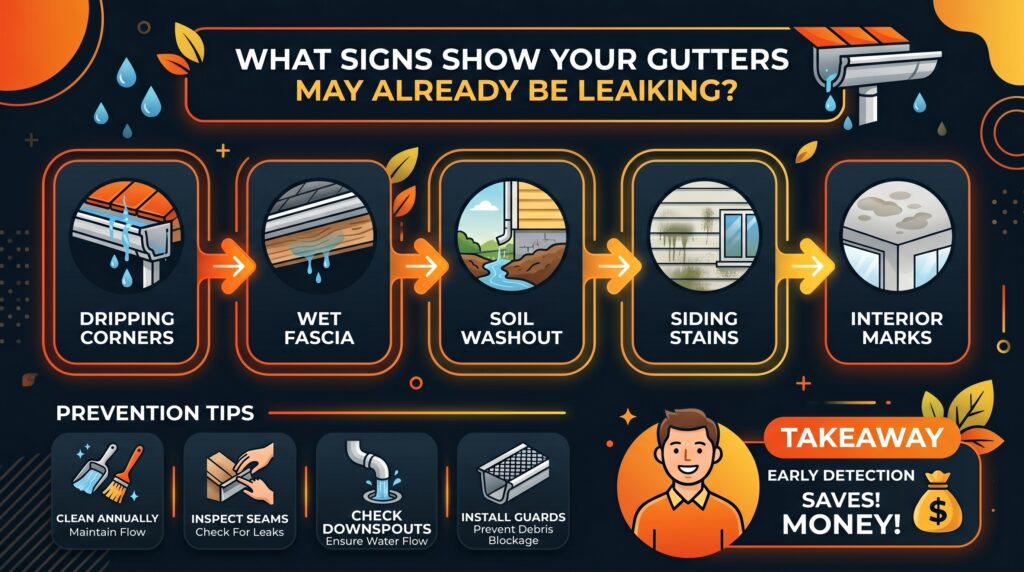
What Signs Show Your Gutters May Already Be Leaking?
The causes of leaking gutters often show warning signs first. You may notice water falling from odd places. You may also see stains, soft soil, or peeling paint. These clues help you act before repairs become more expensive.
- Dripping Corners: Water may leak near seams or end caps.
- Wet Fascia: Moisture behind gutters can weaken wood.
- Soil Washout: Water may spill beside your foundation.
- Siding Stains: Dirty streaks can show repeated leaks.
- Interior Marks: Ceiling spots may mean water traveled inside.
You should take signs of leaking gutters seriously. A small drip can become gutter overflow during a hard storm. That overflow may soak mulch, stain siding, or move toward your basement. If water keeps escaping the same area, you can seal weak leak points early before the problem reaches nearby trim or walls.
Which Causes of Leaking Gutters Happen Most Often?
Most gutter leaks come from age, debris, storm stress, or poor installation. A few issues show up again and again. You may see loose seams, cracked end caps, clogged outlets, sagging sections, or water pooling inside the run.
| Problem Area | What Usually Happens | What You May Notice |
| Joints | Seams open after wear | Drips near corners |
| End Caps | Caps loosen or crack | Water leaks from ends |
| Clogs | Debris blocks flow | Overflow during rain |
| Hangers | Brackets loosen | Gutter pulls away |
| Downspouts | Water exits too slowly | Pooling near walls |
Older gutters also need closer attention. Metal expands, contracts, and shifts over time. Sealant can dry out. Heavy debris can pull the system down. Hail and wind can make weak points worse. If your home has long roof runs, you may also have not enough downspouts. That can overload the system during heavy rain.
How Can You Find the Causes of Leaking Gutters Before Repairs?
You can start with a simple ground check. Walk around your home after rain. Look for water trails, stains, puddles, and damp mulch. Check where water falls. It should exit through downspouts, not random gutter edges.
- Check Corners: Look for drips near seams and end caps.
- Watch Overflow: See where water jumps over the gutter.
- Look at Fascia: Search for dark or soft areas.
- Check Downspouts: Make sure water exits freely.
- Review Soil: Notice washed-out mulch or pooling.
- Call Help: Contact gutter repair experts for high areas.
The causes of leaking gutters can hide above eye level. You may see water on the ground, but not the source. That is why a full inspection matters. A local crew can find bad pitch, loose hardware, hidden cracks, and blocked outlets. Cranmer can check your gutter system safely before small leaks damage your exterior.
Why Do Clogs and Overflow Cause Gutter Leaks?
The causes of leaking gutters often begin with debris. Leaves, twigs, roof grit, and seed pods can block the water path. Once water cannot move, it rises. Then it spills over the front, back, or side.
Clogged gutters can also add heavy weight. That weight pulls on hangers and seams. Over time, the gutter may sag or separate from the fascia. Then gutter overflow becomes more common during storms. You should clean problem areas before they strain the system. You should also check downspouts because a hidden blockage can make a clean gutter fail. Regular cleaning gives water a clear path and lowers leak risk.
Which Causes of Leaking Gutters Come From Weak Parts?
Some leaks come from worn parts, not debris. Joints, end caps, hangers, and seams all take stress. Rain, heat, cold, and wind can loosen them. When those parts shift, water finds small openings and escapes.
| Weak Part | Common Issue | Smart Fix |
| End Caps | Caps loosen or crack | Replace gutter end caps |
| Joints | Seams separate or split | Seal or repair joints |
| Hangers | Brackets pull loose | Replace loose gutter hangers |
| Sections | Metal cracks or dents | Patch or replace parts |
Leaking gutter joints are common near corners and downspouts. These areas handle more water movement. They also catch more debris. End caps can fail when sealant dries or metal shifts. Loose hangers can create gaps behind the gutter. Each part may look small, but it affects the full system. Strong repairs help your gutters carry water without side leaks.
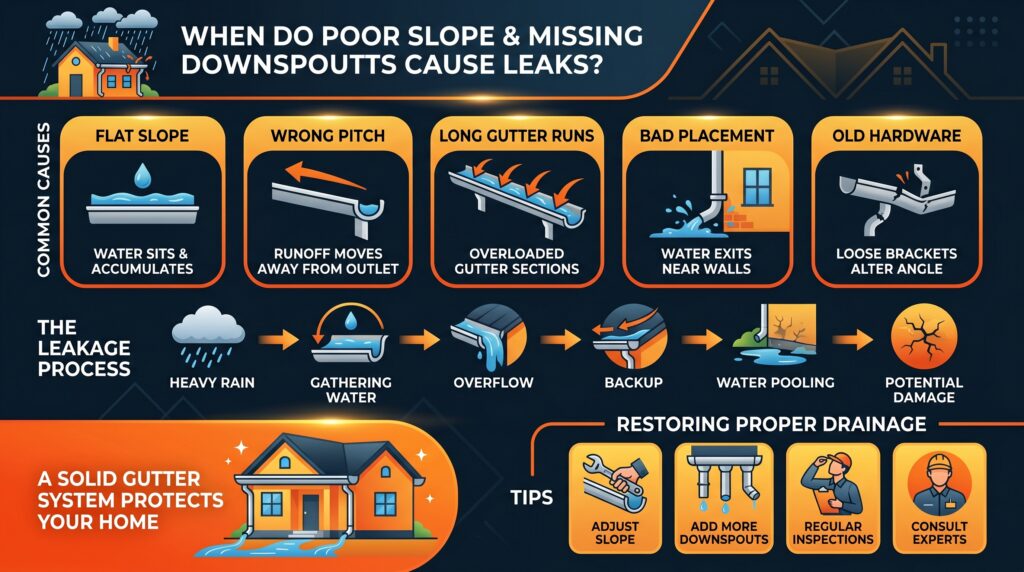
When Do Poor Slope and Missing Downspouts Cause Leaks?
The causes of leaking gutters can come from layout problems. Gutters need the right pitch to move water. If the slope stays too flat, water sits. If the slope points wrong, water backs up.
- Flat Slope: Water sits and weakens seams.
- Wrong Pitch: Runoff moves away from the outlet.
- Long Runs: Too much water enters one downspout.
- Bad Placement: Water exits near walls or walkways.
- Old Hardware: Loose brackets change the gutter angle.
You may also have not enough downspouts for your roofline. Long gutter runs need enough exits. Without them, heavy rain overloads one section. That can cause overflow, seam stress, and pooling near the home. You may need new outlets, better downspout placement, or slope correction. A professional review helps you avoid guessing. It also helps match drainage to your roof size and Missouri storm patterns.
How Can You Prevent the Main Causes of Leaking Gutters?
Prevention starts with clean flow and strong support. Your gutters need open troughs, solid hangers, sealed joints, and clear downspouts. When you keep those parts working, you reduce leaks before storms expose weak spots.
You should schedule gutter maintenance at least twice a year. Spring and fall work well for many Missouri homes. You may need extra service after hail, wind, or heavy leaf drop. I also suggest checking water exit points after strong rain. Make sure runoff moves away from your foundation. This simple habit helps reduce water damage in a home and keeps exterior repairs under control.
What Should You Do When Gutter Leaks Keep Coming Back?
Repeat leaks usually mean the real issue remains. You may clean the gutter, but poor slope still exists. You may seal a seam, but loose hangers still pull the run away. That is why repeat leaks need deeper attention.
The causes of leaking gutters can connect together. A clog can create overflow. Overflow can stress hangers. Loose hangers can open joints. Open joints can damage fascia. You may need cleaning, sealing, realignment, or replacement parts. A trained eye can find the pattern faster. Cranmer helps homeowners choose practical repairs that support long-term drainage, not quick patchwork that fails again.
Frequently Asked Questions
What are the most common causes of leaking gutters?
The most common issues include clogged gutters, bad slope, loose hangers, and weak joints. Damaged end caps can also cause leaks. These issues can lead to overflow and exterior damage.
How do I know if my gutters are leaking?
Look for signs of leaking gutters after rain. You may see drips, streaks, puddles, peeling paint, or wet fascia. Water should only exit through downspouts.
Can gutter leaks cause water damage inside my home?
Yes, leaks can cause water damage in a home when runoff reaches weak areas. Water may enter through roof edges, walls, or foundation gaps. Early repair helps lower that risk.
Should I repair or replace leaking gutter parts?
Small cracks may need sealing. You may need to replace gutter end caps or replace loose gutter hangers when parts fail. A local inspection can confirm the best choice.
When should I call gutter repair experts?
Call gutter repair experts when leaks return after cleaning. You should also call when gutters sag, overflow, or pull away. High rooflines also need safer professional care.
How Can Cranmer Help Fix Leaking Gutters?
Cranmer Seamless Siding & Gutters helps you find the causes of leaking gutters before they create bigger repair needs. Their team checks clogs, seams, slope, hangers, end caps, downspouts, and water flow.
If your gutters drip, overflow, sag, or stain your siding, do not wait for the next storm. Cranmer serves Chillicothe, Cameron, and nearby Missouri areas with trusted gutter repair, cleaning, inspection, and exterior protection support. Your home deserves steady drainage, clean rooflines, and strong defense against water problems.
- Company Name: Cranmer Seamless Siding & Gutters
- Address: 905 Fairlane Dr, Chillicothe, MO 64601, United States
- Number: 816-262-4383