
Most homes need gutter checks twice each year. Spring and fall are the best times. Storms may create extra repair risks. Cranmer Seamless Siding & Gutters helps protect your roofline, siding, fascia, and foundation. With smart timing, you can catch clogs, weak seams, and overflow early while gaining better protection against leaks before heavy Missouri rain reaches your home.
Why Should You Inspect Your Gutters Before Damage Starts?
Gutters protect more than your roof edge. They guide rainwater away from your siding, soil, porch, and foundation. When they clog or shift, water starts moving into the wrong places. That is when small warning signs become costly repairs.
You should not wait for water to pour over the edge. A small blockage can hide inside one outlet for weeks. During heavy rain, that clog can force water behind fascia boards or down the siding. In my experience, routine inspections help homeowners catch loose hangers, poor slope, old sealant, and hidden debris early. If you want a safer local review, you can get a closer look at your gutter system before water damage spreads.
What Warning Signs Mean You Should Check Your Gutters Soon?
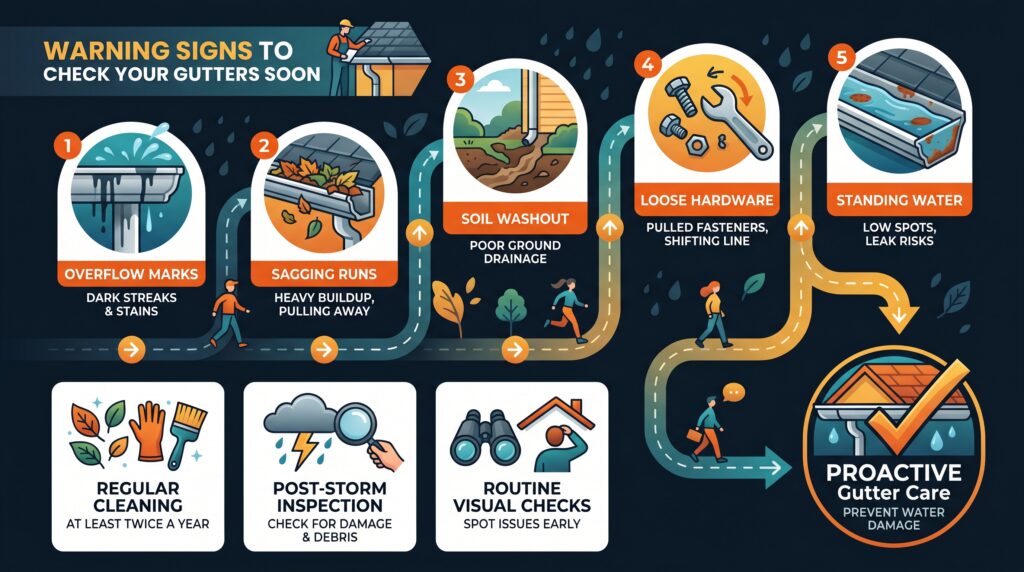
You should inspect your gutters when water stops draining the right way. Look for stains, puddles, sagging sections, or loose parts. These signs often show blocked flow, poor slope, or weak seams before you notice major damage inside your home.
- Overflow Marks: Dark streaks may show repeated water spills.
- Sagging Runs: Heavy buildup can pull gutters away.
- Soil Washout: Missing mulch can reveal poor drainage.
- Loose Hardware: Pulled fasteners can shift the gutter line.
- Standing Water: Low spots can lead to rust and leaks.
These signs deserve quick attention. You should also watch for basement water seepage after rain. Water near the foundation can move into lower areas over time. If you see dripping corners or wet fascia, you can repair small leaks early before they spread into trim, siding, or interior spaces.
When Should You Inspect Your Gutters During the Year?
Spring and fall work best for most Missouri homes. Spring checks help you find winter wear, roof grit, and loose sections. Fall checks help you remove leaves before freezing weather. You should also check after hail, wind, or long rain.
| Best Time | What You Should Check | Why It Helps |
| Spring | Loose hangers and old debris | It prepares drainage for storms. |
| Fall | Leaves and blocked outlets | It helps prevent clogged gutters. |
| After Storms | Dents, leaks, and shifted runs | It catches storm damage early. |
| Before Winter | Standing water and low spots | It lowers freeze stress. |
Homes with nearby trees need extra attention. Leaves, twigs, seed pods, and roof grit can collect fast. You may need to flush debris more often when branches hang over your roof. You should also check after roof repairs because shingle grit can settle inside the trough. A simple schedule keeps water moving away from your home.
What Steps Help You Inspect Your Gutters the Right Way?
Start with a ground check first. Look for stains, sagging lines, puddles, and splash marks. Do not climb when the soil feels wet or uneven. Safety matters more than speed during any gutter review.
- Walk the Home: Check siding, corners, soil, and downspout exits.
- Look for Debris: Find leaves, nests, sticks, and roof grit.
- Clear the Troughs: Remove buildup so water can flow.
- Test Downspouts: Run water through each outlet.
- Check Seams: Look for drips at joints and caps.
- Review the Slope: Make sure water moves downhill.
You can clean gutters during this process if the area feels safe. Then use a hose to water test gutters after clearing buildup. If water sits still, the slope may need correction. If water spills over one corner, a downspout may be blocked. When the system sits high, call a trained crew. You can also ask for better drainage support when clogs keep coming back.
How Can Poor Gutter Care Cause Home Damage?
You should inspect your gutters because water damage often starts quietly. One blocked outlet can push rain over the edge. That overflow can soak fascia, stain siding, damage mulch, and weaken soil close to your home.
Repeated overflow can create bigger problems. Water near your foundation can increase foundation issues. It can also cause damp smells, mold risk, and basement water seepage. Inside your home, you may notice stained ceilings if moisture finds a weak path. From an expert view, gutter care works best as prevention. It costs less than wood repair, drywall work, or foundation service.
How Does Cranmer Help You Inspect Your Gutters Better?
Cranmer understands local homes, storms, and drainage problems. Missouri rain can expose weak gutter systems fast. Their team checks more than visible debris. They review flow, slope, seams, fasteners, downspouts, fascia support, and signs of water stress.
| Service Focus | What It Finds | Why It Matters |
| Flow Review | Slow drainage and backups | It improves runoff control. |
| Seam Check | Weak sealant and drips | It supports protection against leaks. |
| Downspout Review | Blocked outlets and poor discharge | It moves water away. |
| Fascia Review | Soft spots and hidden stress | It protects roofline support. |
A homeowner may notice one clog. A trained crew may find why it keeps returning. That difference matters. For example, one wet corner may come from bad pitch, not only leaves. Cranmer can suggest cleaning, sealing, realignment, or better downspout direction. That gives your home stronger long-term drainage.
What Mistakes Should You Avoid During Gutter Checks?
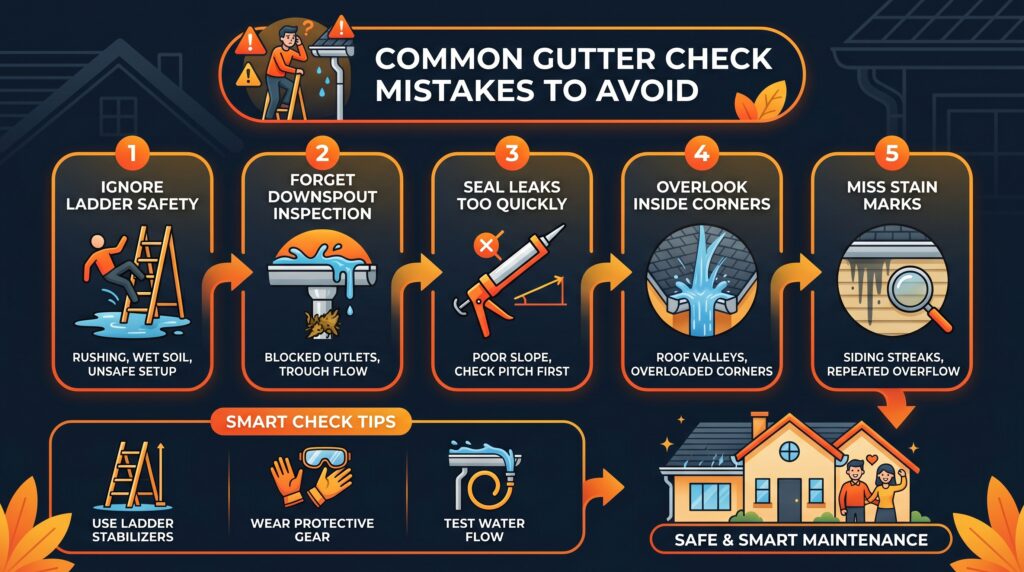
You should inspect your gutters with care, not pressure. Many people rush after storms. They climb too fast, lean too far, or skip the downspouts. Those mistakes can create safety risks and missed damage.
- Skipping Safety: Wet soil and ladders do not mix.
- Ignoring Downspouts: Clear troughs still fail with blocked outlets.
- Sealing Too Fast: Leaks may come from poor slope.
- Forgetting Corners: Roof valleys can overload inside corners.
- Missing Small Stains: Streaks can show repeated overflow.
Good checks need patience. You should review the whole system, not one spot. A clog, leak, or low section can affect nearby areas. When you prevent clogged gutters, you also protect siding, fascia, and soil. Better habits help your gutters last through heavy Missouri storms.
What Should You Know Before You Inspect Your Gutters Again?
Timing, safety, and water flow matter most. Do not only check the trough. Look around your home too. Puddles, mulch washout, and splash marks can show drainage trouble before active leaks appear.
Keep simple notes after each check. Write down where you saw debris, standing water, or overflow. This helps you track repeat trouble spots. It also helps a local expert find the real cause faster. If the same section fills again, a nearby tree may be the issue. If water keeps sitting, the slope may need service. That habit makes routine inspections more useful.
Frequently Asked Questions
How often should you inspect gutters?
Most homes need checks twice each year. Spring and fall are usually best. You may need more checks if trees hang over your roof.
Can you inspect your gutters from the ground?
Yes, you can spot many warning signs from below. Look for sagging sections, water stains, and soil washout. A closer review may still need safe ladder work.
Should you clean gutters before a water test?
Yes, you should clean gutters before testing flow. Leaves and grit can hide drainage issues. After cleaning, run water through each section.
Can clogged gutters cause basement water seepage?
Yes, clogged gutters can push water near your foundation. Over time, that can lead to basement water seepage. Better drainage helps lower that risk.
What happens if you ignore stained ceilings?
Stained ceilings can point to moisture problems. Gutters may not always cause them, but they can add to the issue. You should check outside drainage quickly.
How Can Cranmer Help You Protect Your Home?
Cranmer Seamless Siding & Gutters helps you inspect your gutters with safer, smarter local support. Their team helps you find clogs, leaks, slope issues, and drainage concerns before they cause bigger damage.
If your gutters overflow, sag, drip, or send water near your foundation, do not wait for the next storm. A simple check can protect your siding, fascia, basement, and foundation. Cranmer serves Chillicothe, Cameron, and nearby Missouri areas with dependable gutter and exterior protection services. Your home deserves cleaner flow, stronger drainage, and lasting storm defense.
- Company Name: Cranmer Seamless Siding & Gutters
- Address: 905 Fairlane Dr, Chillicothe, MO 64601, United States
- Number: 816-262-4383