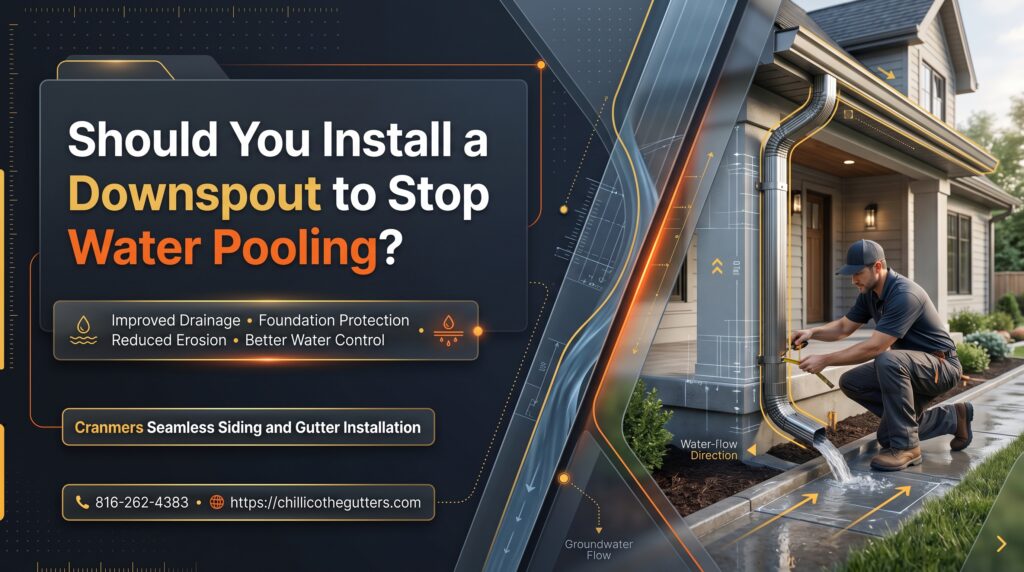
Yes, you should install a downspout if water pools near your home after rain. Pooling water can damage soil, siding, walkways, and basement walls. A proper rainwater downspout gives roof water a safer exit path. It also supports better foundation water protection during storms. For homes in Chillicothe, Cameron, and nearby Missouri areas, Cranmer Seamless Siding & Gutters can help with smart drainage solutions.
Why Should You Install a Downspout for Water Pooling?
Water pooling often starts with poor roof runoff. Your gutters may collect rain, but the water needs direction. When you have a downspout, you give that water a controlled path away from your home.
Standing water near your house is never a small issue. It can soften soil, stain siding, and create basement moisture. Over time, that water can press against your foundation. A professional downspout installation helps move rainwater to a safer area. It also improves your full downspout drainage system. With the right layout, you get better exterior water control and fewer drainage worries.
How Can a Downspout Improve Foundation Water Protection?
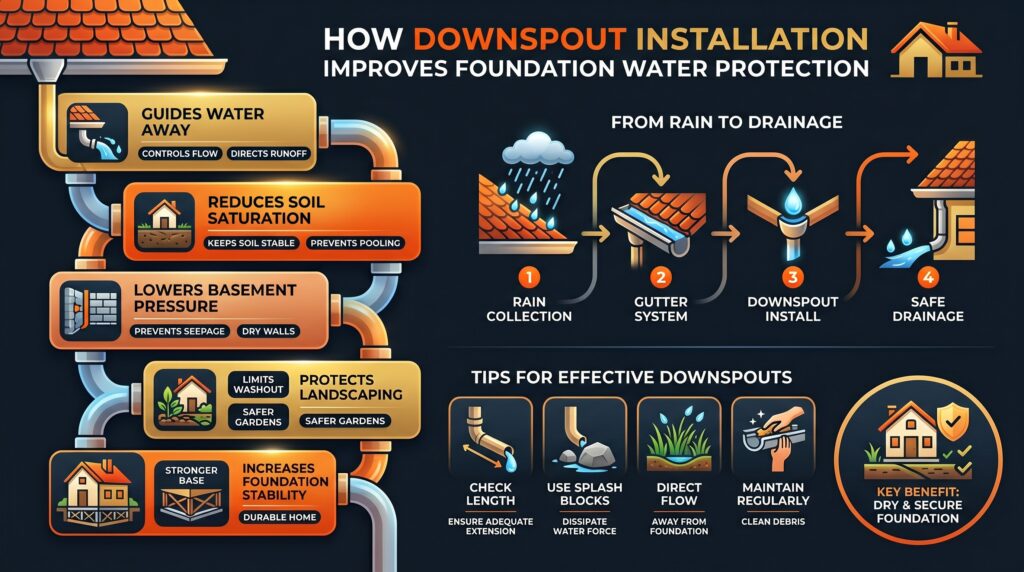
Your foundation needs dry, stable soil around it. Water should not sit beside basement walls. When you use a downspout, you help move runoff away before it creates pressure. That makes your home safer during rainy seasons.
- Better Runoff Direction: A downspout guides water away from walls.
- Less Soil Saturation: Proper drainage helps keep soil more stable.
- Basement Support: Less pooling can reduce damp wall risks.
- Cleaner Landscaping: Controlled flow limits mulch and soil washout.
- Stronger Protection: A good setup supports foundation water protection.
From an expert view, water always finds weak spots. If it pools beside your home, it may reach cracks, gaps, or low areas. A good gutter downspout setup helps stop that pattern. It does not just move water downward. It moves water away. That key difference protects your foundation, walkways, and landscaping.
What Happens If You Do Not Install a Downspout?
Without a downspout, roof water may drop straight down. It can land beside your home again and again. This creates soft soil, splash marks, and puddles that return after each storm.
| Pooling Problem | What You May See | Helpful Downspout Fix |
| Water near walls | Puddles after rain | Add a downspout |
| Splashback | Dirt marks on siding | Redirect roof runoff |
| Washed mulch | Bare soil near beds | Improve outlet placement |
| Basement dampness | Moist wall areas | Move water farther away |
| Low yard spot | Standing water | Add an extension path |
Many homeowners notice the yard problem first. You may see muddy spots near a corner. You may also see mulch floating away. Later, you may notice peeling paint, basement dampness, or foundation stains. These signs often point to poor roof water drainage. A proper water runoff solution can fix the cause, not just the symptom. That may include a new downspout, extension, elbow, or outlet change.
What Makes a Downspout Drainage System Work Well?
A good downspout drainage system needs more than a pipe. It needs the right location, height, angle, and outlet direction. When you install a downspout, each part should support safe water movement.
- Proper Placement: The downspout should sit where roof water collects.
- Secure Attachment: Brackets should hold it firmly against the home.
- Correct Outlet Direction: Water should flow away from the foundation.
- Useful Extensions: Extensions help move runoff farther from walls.
- Clear Water Path: The exit area should not block or trap water.
The goal is simple. Water should leave the roof and move away fast. If the outlet points toward your home, pooling may continue. If the downspout is too short, water may still soak the soil near your foundation. Cranmer Seamless Siding & Gutters can inspect your gutter line and recommend the right home drainage upgrade for your property.
When Should You Choose To Install a Downspout?
You should choose downspout installation when rainwater keeps collecting near your home. Puddles after every storm are a warning sign. You should also act if gutters overflow near one corner or water stains your siding.
| Sign You Notice | What It May Mean | Best Next Step |
|---|---|---|
| Water collects near your home | Your current downspouts may not move rainwater far enough away. | Install a new downspout or add a longer extension to guide water away. |
| Puddles appear after every storm | Water may be draining in the same weak spot each time. | Check the gutter outlet and choose better downspout placement. |
| Gutters overflow near one corner | One outlet may be handling too much roof runoff. | Add an extra downspout to reduce pressure on that section. |
| Water stains your siding | Rainwater may be spilling over or splashing back against the wall. | Install a properly placed downspout to control the water flow. |
| Long gutter runs drain poorly | The gutter may be too long for one downspout to handle. | Ask a local pro to inspect the roofline and recommend the right setup. |
Some homes need extra downspouts because roof sections drain unevenly. Long gutter runs can overload one outlet. A steep roof can send too much water into one area. In those cases, one small change may not solve everything. You may need a better rainwater downspout, a longer extension, or proper downspout placement. A local inspection helps you avoid guesswork and wasted repairs.
How Does Proper Downspout Placement Stop Water Pooling?
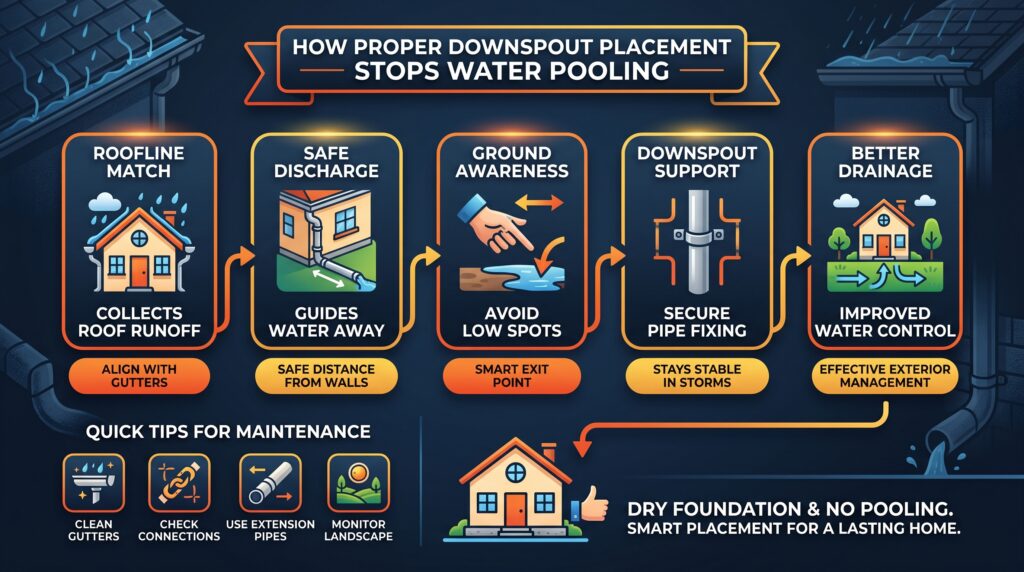
Proper downspout placement helps stop pooling by choosing the best water exit point. The downspout should collect roof runoff and release it in a safe direction. This keeps water away from your walls and foundation.
- Roofline Match: The outlet should match the roof’s water flow.
- Safe Discharge: Water should drain away from the house.
- Ground Awareness: The outlet should avoid low spots.
- Downspout Support: Secure pipes stay in place during storms.
- Better Drainage: Smart placement improves exterior water control.
For example, a downspout placed beside a low flower bed may create repeat puddles. Moving that water a few feet away can make a big difference. You may also need an extension or splash block. These small details create a better water runoff solution. They help protect your home without changing the whole yard.
Should You Install a Downspout Upgrade and Will it Help After Heavy Rain?
Yes, a home drainage upgrade can help after heavy rain. If water pools often, your current setup may not handle stormwater well. You may need better gutters, more downspouts, or longer discharge routes.
Heavy rain tests every part of your drainage system. Gutters must catch water. Downspouts must carry it down. The ground must send it away. If one part fails, pooling starts. When you install a downspout in the right place, your system becomes more reliable. You also reduce stress on your roofline, fascia, siding, soil, and foundation. That makes drainage upgrades worth considering.
Frequently Asked Questions
Should I install a downspout if water pools near my house?
Yes, a downspout if water pools near your home. Pooling water can harm your foundation, soil, and siding. A downspout gives roof water a safer path.
What does downspout installation include?
Downspout installation can include placement planning, pipe fitting, brackets, elbows, and outlet direction. It may also include extensions. The goal is better water movement away from your home.
How does a rainwater downspout protect my foundation?
A rainwater downspout moves roof runoff away from your foundation. This helps reduce soil saturation near your walls. It also supports better basement protection.
What is proper downspout placement?
Proper downspout placement means placing outlets where roof water collects. The water should drain away from your home. It should not empty into low soil areas.
Can a downspout drainage system stop yard erosion?
Yes, a downspout drainage system can help reduce yard erosion. It controls where roof water exits. This helps protect mulch, grass, soil, and walkways.
Do You Need to Install a Downspout for Better Water Control?
Your home needs safe drainage after every storm. When you use a downspout, you can reduce pooling, protect your foundation, and improve roof water drainage.
Cranmer Seamless Siding & Gutters helps homeowners in Chillicothe, Cameron, and nearby Missouri areas. Their team offers downspout installation, gutter repair, gutter cleaning, gutter replacement, fascia support, and siding help. If you need a better gutter downspout setup or home drainage upgrade, their local experts can help.
- Company Name: Cranmer Seamless Siding & Gutters
- Address: 905 Fairlane Dr, Chillicothe, MO 64601, United States
- Phone Number: 816-262-4383