If you want a cleaner exterior, install vinyl siding is a smart move. It gives your home a fresh look with less upkeep. Many homeowners choose vinyl siding installation for value, durability, and style. It also works well with modern trim, soffit, and moisture control needs. This guide explains why more people install vinyl siding today and how the right plan protects your home long term.
Why Does It Make Sense to Install Vinyl Siding on Your Home?
Your siding does more than change curb appeal. It protects your walls from weather, moisture, and daily wear. When old siding starts cracking, fading, or pulling away, your home loses both protection and visual value. That is why many homeowners now choose to install vinyl siding instead of delaying exterior upgrades.
A well-planned vinyl siding installation gives you a cleaner look and stronger surface protection without constant repainting. It also works well with updates like vinyl soffit and fascia installation, which help finish the roofline and improve airflow. In my view, this choice makes sense for homeowners who want a balance of appearance, function, and easier maintenance. It can also support better insulation strategy, cleaner trim lines, and a more unified exterior. When you install vinyl siding, you upgrade both style and protection in one project. For more information, check this article by clicking here.
What Benefits Do You Get When You Install Vinyl Siding?
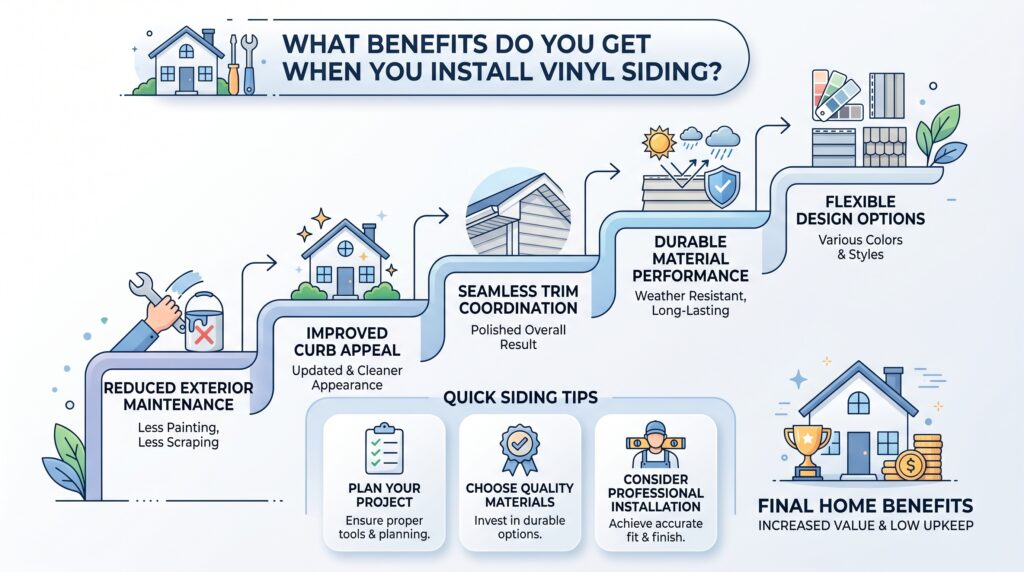
Most homeowners want more than a nice-looking exterior. You also want a product that performs well through changing seasons and keeps upkeep simple. That is one reason so many people now install vinyl siding instead of sticking with materials that need frequent paint work or constant surface repair. A good system gives you a cleaner finish and dependable long-term value.
- Lower Exterior Upkeep: Vinyl siding installation reduces the need for scraping, painting, and repeat touch-ups.
- Cleaner Finished Look: A fresh exterior helps your home look brighter, sharper, and more updated.
- Better Trim Coordination: Proper vinyl soffit, trim and accessories create a more complete and polished result.
- Flexible Design Choices: You can choose colors, profiles, and details that fit your home style.
- Practical Material Value: Good siding offers strong performance without making upkeep harder.
- Stronger Project Planning: The right vinyl siding tools and materials improve fit, finish, and long-term results.
When you install vinyl siding, you are making more than a design choice. You are choosing an exterior system that can simplify care and improve appearance at the same time. I have seen homeowners wait too long because old siding still looked “good enough” from the street. Then moisture stains, warping, or fading made the need obvious. A thoughtful update often solves those issues before they grow larger and more expensive.
How Does It Compare When You Install Vinyl Siding Instead of Keeping Older Siding?
Many older exteriors keep causing the same problems. Paint fades. Boards crack. Moisture gets into weak spots. Repairs start feeling repetitive. When you install vinyl siding, you move toward a cleaner and more manageable exterior system. That shift matters for homeowners who want fewer maintenance headaches and a more consistent look.
The biggest difference often comes from long-term ease. Older materials may need more scraping, sealing, or patchwork over time. A professional vinyl siding installation usually gives you a more uniform finish and simpler cleaning routine. It also allows better coordination with vinyl soffit and fascia installation and other trim upgrades. If your current siding keeps pulling away or looking worn, a full replacement may give much better value than small ongoing fixes. In many cases, homeowners choose this route because they want practicality, not just appearance.
| Feature | Vinyl Siding | Older High-Maintenance Siding |
| Upkeep needs | Lower | Higher |
| Painting needs | Rarely needed | Often needed |
| Exterior appearance | Clean and consistent | Can fade or crack |
| Trim coordination | Easier | Sometimes limited |
| Upgrade flexibility | Strong | Often lower |
| Long-term convenience | Better | Less convenient |
How Should You Plan Before You Install Vinyl Siding?
Good siding results start before the first panel goes up. You need to look at wall condition, moisture risk, trim details, and the overall scope of the project. When you install vinyl siding, planning helps prevent uneven lines, poor fit, and avoidable future issues. That is why preparation matters as much as the material.
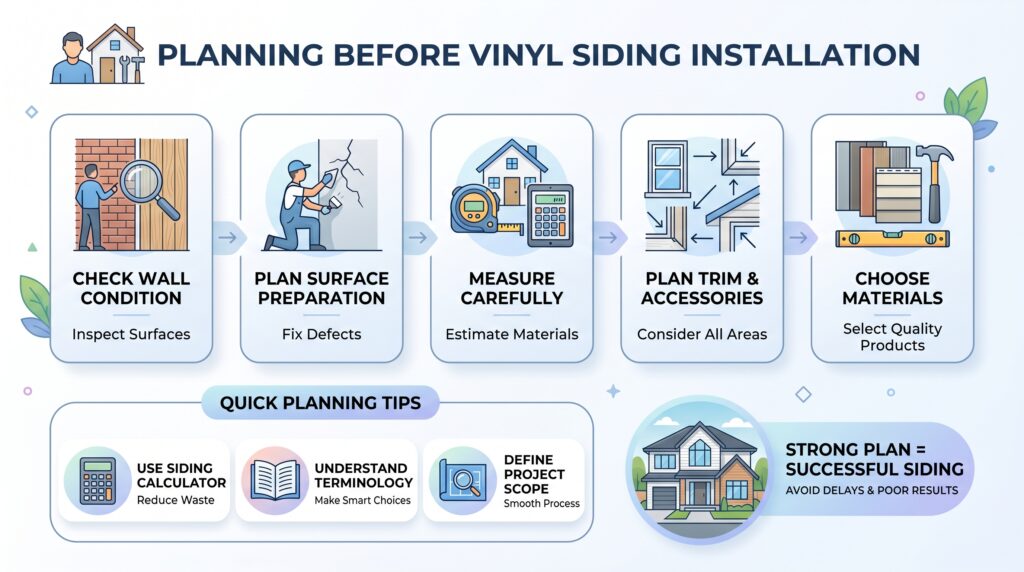
A strong plan includes surface preparation for vinyl siding, proper measurements, and a clear understanding of the home’s exterior layout. It also helps to review vinyl siding terminology so you understand pieces like starter strips, J-channels, corners, and trim sections. Many homeowners also use a siding calculator to estimate materials and reduce waste. In my experience, projects go much smoother when the planning stage gets real attention. That is how you avoid ordering problems, installation delays, and layout mistakes that affect the final look.
- Check Wall Condition: Review the exterior surface before you install vinyl siding on any section.
- Plan Surface Preparation: Strong surface preparation for vinyl siding helps create a better finished result.
- Measure Carefully: A good siding calculator helps you estimate panels, trim, and waste more accurately.
- Review Trim Areas: Plan soffit, corners, and vinyl soffit, trim and accessories before installation starts.
- Choose the Right Materials: Good vinyl siding tools and materials improve speed, fit, and consistency.
- Understand the System: Basic vinyl siding terminology helps you make smarter project decisions.
When you plan well, the project becomes easier to manage from start to finish. You reduce waste, avoid avoidable mistakes, and get a cleaner final look. That is one reason experienced installers spend so much time on measurements and layout. A smooth vinyl siding installation depends on smart preparation, not just fast labor. Good planning protects the investment before the first piece gets locked into place.
What Should You Know About Surface Preparation for Vinyl Siding?
Preparation affects how well the siding looks and lasts. If the wall surface underneath has damage, trapped moisture, or uneven sections, the finished project may not perform the way you expect. That is why surface preparation for vinyl siding deserves serious attention before installation day begins.
You should check for damaged sheathing, soft spots, loose trim, and moisture issues before you install vinyl siding. You also want the wall to be clean, stable, and ready for proper attachment. In my opinion, homeowners sometimes focus too much on panel color and not enough on what sits underneath. That can be a costly mistake. A clean and stable base helps the siding sit better, look straighter, and perform more reliably over time.
Why Do Vinyl Siding Tools and Materials Matter So Much?
The final result depends on more than the siding panels. It also depends on the quality of the supporting parts and the way the work gets done. That is why vinyl siding tools and materials play such a big role in the outcome. Strong tools help create cleaner cuts, straighter lines, and more secure attachment.
Good materials matter just as much. Trim pieces, starter strips, fasteners, and channels all affect how the system fits together. That includes vinyl soffit, trim and accessories, which help complete edges and roofline details. If the wrong parts get used, the project may look uneven or wear out faster in certain areas. When you install vinyl siding, every small component helps support the larger finished system.
How Can Insulation for Vinyl Siding Improve the Result?
Siding and insulation often work best as a team. While siding protects the outer wall, the right insulation plan can improve comfort and help the exterior system perform better overall. That is why many homeowners think about insulation for vinyl siding during the same project instead of waiting until later.
A good insulation plan can help smooth the wall surface and support a more even finished look after you install vinyl siding. It can also improve comfort inside the home, depending on the structure and climate needs. In my view, it makes sense to review insulation when the wall system is already open for exterior work. That timing often gives homeowners a better opportunity to improve efficiency and appearance in one coordinated update.
What Steps Help You Install Vinyl Siding the Right Way?
A good project follows a clear order. It starts with prep, then layout, then secure installation, and finally the finishing details that make the whole exterior look complete. If you want the best result when you install vinyl siding, you need a method that respects both function and appearance.
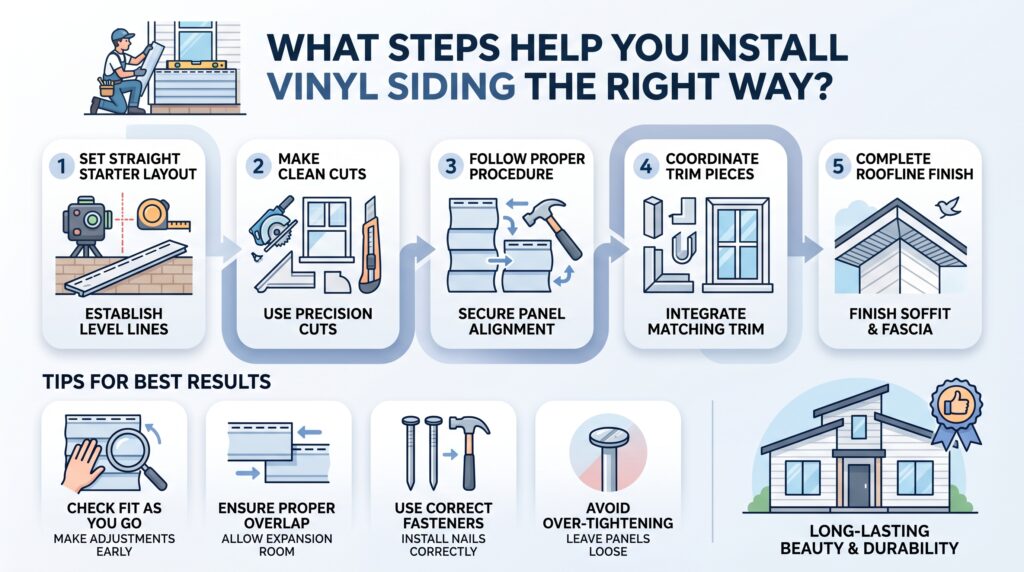
The core vinyl siding techniques and procedures should include careful measuring, level starter setup, panel alignment, trim planning, and clean finishing at corners and rooflines. Good installers also think through vinyl siding cutting methods before the work starts because clean cuts affect fit and visual quality. I have seen rushed projects where the main panels looked decent from a distance, but the trim and cut areas made the shortcuts obvious. That is why the process matters just as much as the product.
- Start With Layout: A straight starter line sets the tone for the full vinyl siding installation.
- Use Clean Cuts: Smart vinyl siding cutting methods improve fit around windows, doors, and trim.
- Follow Proper Procedure: Reliable vinyl siding techniques and procedures support stronger long-term performance.
- Finish Roofline Details: Good vinyl soffit and fascia installation helps complete the upper exterior cleanly.
- Coordinate Trim Pieces: Proper vinyl soffit, trim and accessories create a more polished look.
- Check Fit as You Go: Small adjustments during installation prevent larger visual issues later.
When you install vinyl siding with a solid method, the home looks better and the project runs more smoothly. Good procedure helps panels sit right, edges line up, and trim feel intentional instead of added as an afterthought. In my opinion, homeowners get the best value when they choose installers who care about these details because the cleanest projects almost always come from disciplined process, not speed alone.
Is It Worth It to Install Vinyl Siding as a Long-Term Upgrade?
For many homeowners, yes. This type of siding offers a strong mix of appearance, practicality, and easier upkeep. When you install vinyl siding, you are choosing a system that can freshen the exterior without creating constant maintenance tasks in the years ahead.
The long-term value comes from reduced repainting, a cleaner finish, and simpler care compared with many older materials. It also gives you the chance to improve details like vinyl soffit and fascia installation, trim alignment, and overall exterior consistency. In my experience, homeowners usually notice the value quickly because the home looks more updated almost immediately. Over time, they appreciate the easier maintenance even more.
What Questions Do Homeowners Ask Before They Install Vinyl Siding?
Is vinyl siding a good choice for most homes?
Yes, for many homes it is. A quality vinyl siding installation offers good appearance, simpler upkeep, and strong long-term practicality.
Why does surface prep matter so much?
Because surface preparation for vinyl siding affects both appearance and performance. A poor base can lead to uneven panels and weaker results.
Do you need special tools for the project?
Yes, proper vinyl siding tools and materials help improve cuts, fit, and installation quality. The right setup supports a cleaner and more consistent final look.
Should you update soffit and fascia at the same time?
Often, yes. Combining the main project with vinyl soffit and fascia installation can create a more finished and coordinated exterior.
What helps homeowners estimate materials better?
A siding calculator helps plan panel counts, trim needs, and waste more accurately. It makes project planning much easier before you install vinyl siding.
Are You Ready to Install Vinyl Siding for a Better Exterior?
If you want a cleaner look and easier upkeep, now is a smart time to act. A well-planned siding project can improve both protection and curb appeal. It can also make the whole home feel more finished.
Cranmer’s Seamless Siding & Gutters helps homeowners upgrade their exteriors with solutions that match real property needs. If you want to install vinyl siding, improve trim details, or plan a full vinyl siding installation, this is the kind of service that adds lasting value. Reach out today to discuss siding options, better exterior planning, and a smarter path to a cleaner home exterior.
- Company Name: Cranmer’s Seamless Siding & Gutters
- Phone Number: 816-262-4383
- Website Link: https://chillicothegutters.com