
Downspouts look simple from the ground. The job still needs care. One wrong cut can cause leaks. One short extension can send water toward your foundation. Cranmer Seamless Siding & Gutters helps you avoid those costly mistakes. With the right layout, fasteners, and proper drainage, your gutter system can move stormwater away from siding, soil, walkways, and basement walls with better control.
Why Does Installing Downspout on Gutter Runs Matter?
Your gutter system needs a clear exit path. Gutters collect roof water, but downspouts move it down and away. Without a good discharge path, water may spill near walls. That can weaken soil and damage exterior areas.
A careful downspout installation helps your home handle heavy rain. It also reduces splashback on siding and puddles near the foundation. In my experience, many drainage problems start at the lowest point of the gutter run. Water collects there, then backs up or overflows. If your current gutter layout struggles during storms, you can improve the way your roof water exits before damage spreads.
What Should You Check Before You Start the Project?
You should check your full gutter run before installing downspout on gutter sections. Look at water flow, roof size, slope, wall distance, and ground grade. A downspout only works well when it matches the roofline and sends water far enough away.
- Lowest Point: The outlet should sit where water naturally collects.
- Roof Load: Larger roof areas need stronger water capacity.
- Wall Path: The pipe should run straight when possible.
- Soil Slope: Water should move away from your home.
- Outlet Space: The bottom should allow safe discharge.
You should also inspect existing gutters first. Loose sections can shift after you add new pipe weight. Damaged fascia can make brackets less secure. If water already pools near your home, you may need more than one downspout. A local review can protect foundation drainage and prevent repeat overflow. You can check the system before cutting into it for a safer plan.
How Should Installing Downspout on Gutter Runs Be Planned?
Planning comes before cutting. You need the right outlet spot, pipe path, and bottom discharge area. You should also choose the correct size for your gutter run. A small pipe may fail during hard rain.
| Planning Area | What You Should Review | Why It Matters |
| Outlet Location | Lowest part of the gutter | It supports steady water flow. |
| Pipe Route | Straight wall path | It reduces bends and leaks. |
| Ground Exit | Safe discharge area | It improves proper drainage. |
| Attachment Points | Strong wall support | It keeps pipes steady. |
| Water Volume | Roof size and rain load | It helps prevent overflow. |
Poor planning causes avoidable problems. A downspout that ends too close to the wall can create inadequate foundation clearance. Too many bends can slow water. Weak supports can shake during storms. You should also consider walkways, porches, flower beds, and basement entry points. A good layout moves water away without creating a new problem somewhere else.
What Steps Make Installing Downspout on Gutter Safer?
A safe installation needs accurate measuring and clean connections. You need to cut the outlet neatly, attach the drop outlet, and guide the pipe down the wall. Each part should fit tightly. Rushed work often causes leaks.
- Mark the Outlet: Place the outlet at the gutter’s low point.
- Cut Cleanly: Use a neat opening to reduce leaks.
- Attach the Drop Outlet: Seal and fasten it firmly.
- Fit the Elbows: Guide water from the gutter to the wall.
- Add Vertical Sections: Connect vertical downspout sections securely.
- Install Brackets: Use downspout brackets for firm wall support.
- Extend the Bottom: Move water away from your foundation.
You should avoid guessing during this work. A crooked outlet can leak. Loose straps can rattle in wind. Short bottom extensions can cause puddles near basement walls. If your home has a tall roofline, steep grade, or complex gutters, local help makes sense. Cranmer can correct weak gutter angles and flow issues before you rely on the new downspout.
Which Mistakes Can Hurt Foundation Drainage?
You should avoid shortcuts when installing downspout on gutter runs. The pipe may look fine at first. Problems often show during heavy rain. Water can back up, leak at joints, or collect beside the home.
The biggest issue is poor discharge. Inadequate foundation clearance lets water settle near your walls. Over time, that can hurt foundation drainage and increase basement moisture risk. Another mistake is using too few brackets. Loose pipes move in wind and pull at joints. You should also avoid wrong fasteners, because mismatched metals can weaken the system. Small installation errors can create big water problems.
What Materials Should You Choose for a Better Downspout?
You should match the downspout to your gutter system, home style, and weather needs. Aluminum works well for many homes. Some owners choose vinyl downspouts because they cost less. The right choice depends on durability, appearance, and long-term drainage goals.
| Material or Part | Best Use | What to Watch |
| Aluminum | Most residential homes | Use matching fasteners. |
| Vinyl | Budget-friendly projects | Cold can make it brittle. |
| Steel | Stronger impact resistance | It may need rust care. |
| Copper | Premium exterior style | It needs correct hardware. |
| Brackets | Wall support | Space them properly. |
Material mixing needs care. Galvanic corrosion can happen when the wrong metals touch. For example, some fasteners can react badly with aluminum or copper parts. That can weaken the connection over time. Use proper screws, rivets, and brackets for the material you choose. Good hardware keeps the pipe secure and reduces leak risk during wind, rain, and seasonal changes.
When Should You Consider Rain Barrel Integration?
You may want rain barrel integration if you use roof water for gardens. It can help reduce waste during warm months. The setup still needs careful planning. The barrel should not cause overflow near your foundation.
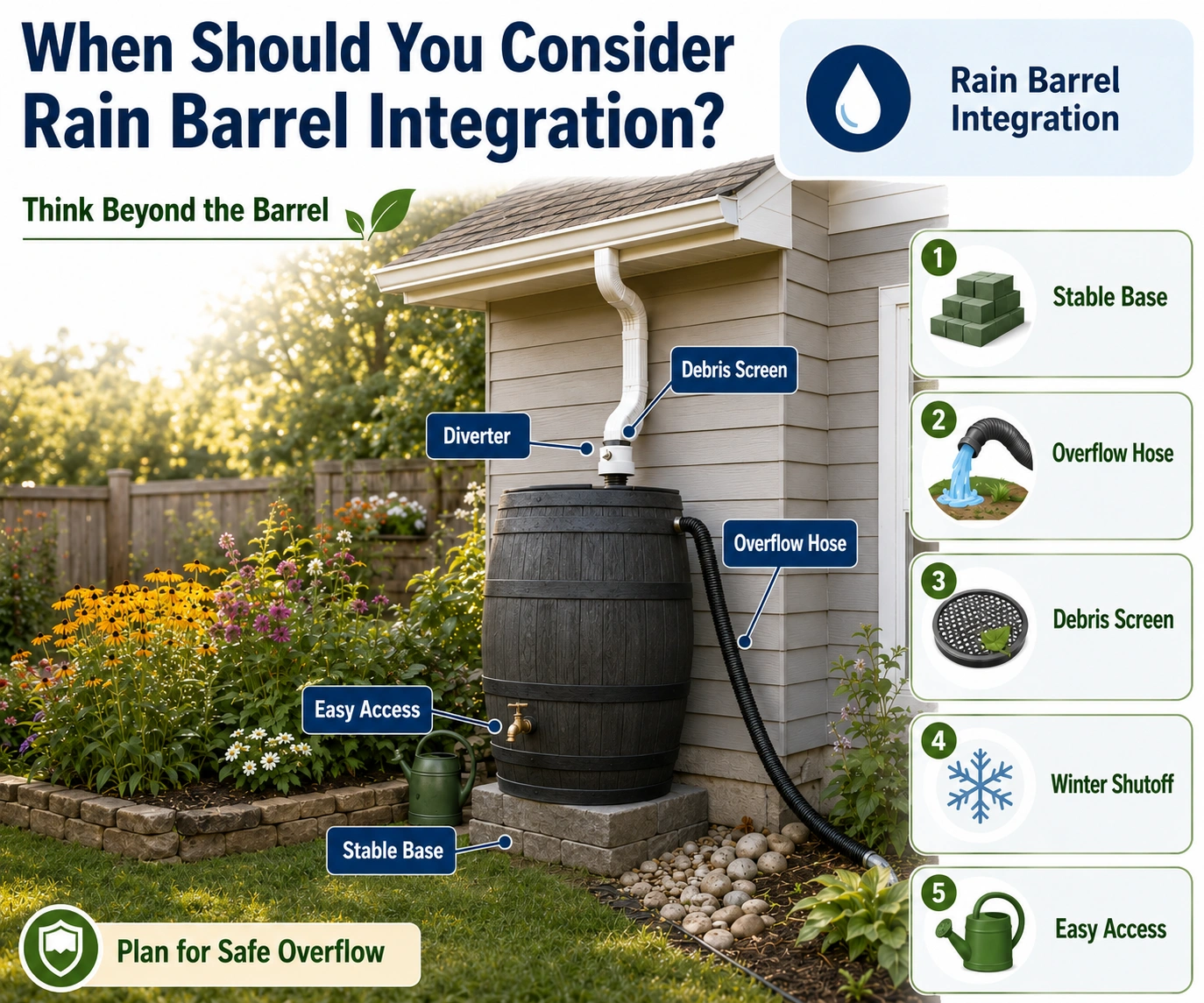
You should think beyond the barrel itself. The downspout needs a diverter, screen, stable base, and overflow path. Without overflow control, heavy rain can spill near the wall. That creates the same problem you wanted to avoid. If you try installing downspout on gutter runs for a barrel, make sure extra water exits safely. Good planning protects landscaping and keeps proper drainage in place.
- Stable Base: The barrel should sit level and strong.
- Overflow Hose: Extra water should move away from walls.
- Debris Screen: A screen helps block leaves and bugs.
- Winter Shutoff: Cold weather may need a shutoff option.
- Easy Access: Place the barrel where you can use it safely.
Should You Try This Work Yourself or Call a Local Expert?
Some homeowners can handle simple downspout repairs. A short, low gutter run may be manageable. Still, you should be honest about safety. Ladders, metal cuts, wall drilling, and water routing all need care.
DIY work can become expensive when the pipe leaks, rattles, or drains too close to the home. If your roofline is high, your gutter run is long, or the soil slopes toward the house, call a local expert. Cranmer can help with downspout installation, slope review, outlet placement, and secure fastening. Good work gives your home better foundation drainage and fewer stormwater problems.
What Long-Term Care Keeps Your Downspout Working?
You should check the downspout after major storms. Look for loose straps, dents, clogged elbows, and water pooling near the outlet. Early checks help you fix small issues before they stress the whole gutter line.
A downspout also needs seasonal cleaning. Leaves and roof grit can block elbows. Small animals may build nests near open areas. You should flush the pipe when water drains slowly. Watch for stains on siding too. They may show leaks at seams or elbows. When you maintain vertical downspout sections, brackets, and extensions, you protect the full drainage path.
Frequently Asked Questions
Is installing downspout on gutter runs a good DIY project?
It can be a DIY project on low, simple gutter runs. You still need safe tools, clean cuts, and strong brackets. Tall homes or complex rooflines need expert help.
How far should a downspout send water from the home?
The goal is to move water away from the foundation. Short exits can cause inadequate foundation clearance. Use an extension when water pools near walls.
Why do downspout brackets matter so much?
Downspout brackets keep the pipe firm against the wall. They reduce movement during wind and rain. Loose brackets can cause rattling, leaks, and pulled joints.
Can wrong fasteners damage my downspout?
Yes, wrong fasteners can weaken the connection. Mismatched metals may also lead to galvanic corrosion. Use hardware that matches your gutter material.
Are vinyl downspouts a good choice for Missouri homes?
Vinyl downspouts can work for some budget projects. They may not feel as strong as metal options. A local installer can help compare material choices.
How Can Cranmer Help With Installing Downspout on Gutter Runs?
Cranmer Seamless Siding & Gutters helps you plan better downspout placement, outlet cuts, brackets, extensions, and drainage paths. Their team focuses on steady water control for Missouri homes.
If water spills over your gutters, pools near your walls, or washes out your landscaping, do not wait for the next storm. Cranmer serves Chillicothe, Cameron, and nearby Missouri areas with trusted gutter installation, inspection, realignment, and repair support. Your home deserves cleaner runoff, safer discharge, and stronger protection from water damage.
- Company Name: Cranmer Seamless Siding & Gutters
- Address: 905 Fairlane Dr, Chillicothe, MO 64601, United States
- Number: 816-262-4383